Friday, August 30, 2013

200th Anniversary of the Fall of Fort Mims

Fort Mims State Historic Site
200 years ago today, Red Stick warriors stormed Fort Mims, a log stockade in the Tensaw settlement north of Mobile, Alabama. It was one of the most overwhelming victories ever achieved by American Indian warriors in battle with white soldiers and civilians.

To read about the events leading up to the attack, please see yesterday's post Fort Mims 200th Anniversary - The Night before the Attack.

The morning of August 30, 1813, found the inhabitants of Fort Mims gathered inside their stockade near Boatyard Lake in what is now Baldwin County, Alabama. It was a hot day and conditions inside the fort were overcrowded, filthy and unpleasant. Security was so lax that the main gate of the fort stood wide open and one of its occupants even went to a building outside the walls and fell asleep in the hay.

Diagram of Fort Mims
Click to Enlarge
The exact time of the attack has been given as 10 a.m., 11 a.m. and 12 noon (people in those days set their watches to the clocks in their hometowns). The sentry was watching some other men play cards when the Red Stick prophets, chiefs and warriors came up from their hiding places in shallow ravines near the fort and began to silently run at full speed for the open gate. When finally noticed, they were only 30 steps away.

The sentry fired a shot and ran into the stockade, his alarm igniting war cries from the throats of hundreds of Creek warriors. Major Daniel Beasley, the Mississippi Territorial Militia officer in command of the fort, rushed forward to try to close the gate but was shot in the stomach before he could do so. The Red Sticks poured through the opening and quickly overwhelmed the militia soldiers encamped just inside to seize control of an interior wall that still divided the fort. It had been expanded to make more room but the old wall had never been taken down.

Meanwhile, other warriors stormed the just finished blockhouse at the other end of the fort and columns attacked from other directions to seize control of the loopholes of the walls. In short, the walls of Fort Mims suddenly benefited the attackers more than they did the defenders. Because the loopholes had been made so close to the ground, the attacking force was able to use them just as effectively - if not more so - than the men inside the fort.

A desperate fight now took place for control of the stockade. As William Weatherford and other Red Stick chiefs and warriors seized control of the walls, the lesser Red Stick prophet Paddy Walsh began to run around the walls of the stockade three times to encourage the men in the attacking force by showing them that he could not be killed by the American bullets. He survived his run, but was struck by a bullet and injured on his third loop around the fort.

Artist's Rendering of Fort Mims Massacre
One group of the defenders attacked the Red Sticks who had occupied the blockhouse and finally drove them back, but it was too little too late. The open gate had given the Red Sticks the advantage they needed and as the afternoon wore on, they exploited it. One by one the defenders of the fort fell.

As the Red Sticks expanded their control of the walls, the defenders were driven back into an area they called the "bastion" (a projection on the north side of the fort). Some used axes to chop almost completely through the logs of the wall so they could break free and try to escape when it appeared that all was lost. Many women and children took shelter in the home of Samuel Mims, which stood in the center of the fort, and Captain Dixon Bailey and the survivors of his company of mestizo Creeks (mestizo means they were of both Creek and white ancestry) knocked out some sections of the roof of the house so they could fire down into the mass of warriors pouring into the fort.

The kitchen of the fort caught fire and the flames soon roared upwards and began to spread to other buildings. Seeing that all was lost, a small group of people broke out through the wall where they had cut away the logs and tried to run for it. Only a handful made it, several of them wounded.

It was later reported that as the home of Samuel Mims burned to the ground - the women, children and wounded trapped inside - blood-covered warriors danced in celebration around to the sounds of their screams.

Monument at Fort Mims
To this day, no one knows how many people died at Fort Mims. Estimates of the total loss to the defenders in men, women and children range from 250 to more than 550. A burial party that came to the ruins of the fort after the battle found the bodies of around 250 men, women and children, but also reported finding the bodies of 100 "Indians."  It is unclear from the report, whether the "Indians" found by the burial detail were Red Sticks or the mestizos who had come to the fort with Captain Bailey. The latter seems probable and if so, then the total loss was probably somewhere around 350 people killed.

Red Stick losses are impossible to estimate. Some accounts suggested that 100 or fewer were killed. Others placed the total loss they suffered at 300 or more.  In truth, no one knew for sure then nor do they know for sure now.

I will post on the magnitude of the disaster and what happened next as we continue to mark the 200th anniversary of the fall of the fort this weekend. If you are interested in attending the reenactments and other commemorative events planned at Fort Mims State Historic Site, they will continue throughout the weekend. Please click here for a detailed schedule and directions to the park: Fort Mims 200th Anniversary Schedule of Events.

To read more about Fort Mims State Historic Site, please visit www.exploresouthernhistory.com/fortmims1.

Friday marks 200th Anniversary of Fort Mims attack

Today (August 30, 2013) marks the 200th anniversary of the attack on Fort Mims, Alabama, by Red Stick warriors during the Creek War of 1813-1814.

To learn more about the attack, please visit http://southernhistory.blogspot.com/2013/08/200th-anniversary-of-fall-of-fort-mims.html.

A full weekend of commemorative events is planned at Fort Mims State Historic Site.

Here is the full schedule for the weekend, including times of the reenactments that are scheduled for today, Saturday and Sunday.


SCHEDULE OF EVENTS

200th Anniversary of Fort Mims

Friday, August 30th

8:00 a.m.     Gates Open
8:30 a.m.     Mules and wagons begin shuttle services.
9:00 a.m.     Music, demonstrations and crafts begin.
10:00 a.m.   Flag raising, memorial and dedication services.
12:00 noon   REENACTMENT ON ACTUAL 200th ANNIVERSARY
1:00 p.m.     Activities, craftsmen, food, music and more.
3:00 p.m.     Events close for the day.

Saturday, August 31st

9:00 a.m.     Gates open, wagons rolling, demonstrations and more.
10:00 a.m.    Flag Raising and Pledge of Allegiance
11:00 a.m.    REENACTMENT OF BURNT CORN CREEK BATTLE
12 noon     Speakers discuss the Tensaw Country and Fort Mims
2:00 p.m.     REENACTMENT OF FORT MIMS ATTACK
3:00 p.m.     Events close fot he day.

Sunday, September 1st

9:00 a.m.     Gates open, crafts and demonstrations begin.
9:30 a.m.     Flag Raising and Pledge of Allegiance
10:00 a.m.    Pioneer Church and old time singing.
11:00 a.m.    REENACTMENT OF BURNT CORN CREEK BATTLE.
12 noon       Speakers discuss the Tensaw Country and Fort Mims
2:00 p.m.     REENACTMENT OF FORT MIMS ATTACK


To reach Fort Mims from I-65, take Exit #34 (Bay Minette/Stockton) and turn north on AL 59 towards Stockton. Follow AL 59 for 47.2 miles to the community of Tensaw. When you reach Tensaw, turn left on Boatyard Road (CR 80) and follow it for 7 miles to Fort Mims Road and turn right. The fort site will be just ahead, but watch for signs for off-site parking as you arrive on location.

To read more about the history of Fort Mims, please visit www.exploresouthernhistory.com/fortmims1.

Thursday, August 29, 2013

Fort Mims 200th Anniversary - The night before the attack

Monument  at Fort Mims
 200 years ago tonight, a force 700-1,000 Red Stick warriors moved to within range of Fort Mims, a roughly built log stockade in the Tensaw settlement north of Mobile, Alabama.

The evening of August 29, 1813, would be the last night on earth for more than 250 of the inhabitants of the fort. They had come there seeking safety, but on the next day Fort Mims would prove to be a trap from which few would escape.

19th Century Artist's Impression of the Big Warrior
The attack was part of the Creek War of 1813-1814, a conflict that had started as a civil war among the Upper Creeks who lived along the Alabama, Coosa and Tallapoosa Rivers. A large segment of the nation had broken away from its traditional leadership - the Big Warrior, Little Prince, William McIntosh and others - and taken up the war club under the leadership of Josiah Francis, a man remembered today as the Alabama Prophet.

Francis grew up in the Alabama towns which were clustered near present-day Montgomery, Alabama. The Alabama (or Alibamo) were an ancient tribe with different traditions and a different language those those of the Muskogee or Upper Creeks. Even so, the Alabamas and the associated Coushatta (or Coosada) had allied themselves with the Muskogees as part of the loosely organized Creek Confederacy.

Tenskwatawa, the Shawnee Prophet
In 1811-1812, however, Josiah Francis converted to the religion of the Shawnee Prophet, Tenskwatawa. A brother of Tecumseh, the Prophet taught that the American Indians should separate themselves from and give up the ways of the whites. Contrary to much 19th century and modern writing, he did not urge war on the whites but instead told his followers they should remain at peace with everyone and should steal nothing from the whites, "not even a bell." He did advocate a strong union of the various Indian nations, but as a defensive measure to halt any further westward expansion by settlers from the United States.

Francis had seen the impact of the "plan of civilization" introduced in the Creek Nation by the United States through the guidance of its Agent for Indian Affairs, Colonel Benjamin Hawkins. Traditional ways were disappearing from the Creeks and the evil influence of alcohol had spread through the Nation. Even though he was the son of a white trader, Francis grew concerned over these influences and listened carefully to Tecumseh when he came to Alabama in the fall of 1811 to spread the word of his brother's religion and prophesies.

Alabama River
Francis did not immediately convert, however, but thought over Tecumseh's message and learned more from the lesser Shawnee prophet Seekaboo, who had remained among the Creeks after the Prophet's brother returned to the Midwest. Josiah Francis became a true believer.

In the late summer of 1812, he announced that he had become a prophet himself. As the warriors in the Alabama towns listened to his preachings, they became convinced that the conversion was real and began calling Francis a "Hillis Hadjo" ("Warrior of Mad Medicine"). From an early group of 60 followers, the Alabama Prophet's following grew dramatically until by early 1813 his converts numbered in the thousands.

19th Century Sketch of a Human Scalp
The U.S. unwittingly ignited the civil war among the Creeks when it demanded the punishment of Little Warrior and a party of the Alabama Prophet's followers who had killed white settlers on the Duck River in Tennessee. The Big Warrior - traditional leader of the Creek Nation - ordered out execution squads to kill the murderers. Francis ordered his own warriors to retaliate and war exploded among the Creeks.

Francis and his followers became known as Red Sticks because they displayed red war clubs in their villages in a traditional sign of war.

As the conflict escalated, a force of 300 Red Sticks went to Pensacola in Spanish Florida to obtain arms and ammunition. The Spanish governor provided them with 1,000 pounds of gunpowder, along with gun flints, other supplies and a corresponding amount of lead shot. As they were making their way back to Holy Ground, the town that the Prophet Francis had established on the upper Alabama River, these warriors were attacked by a force of Mississippi Territorial Militia. The resulting engagement is remembered today as the Battle of Burnt Corn Creek and ended in victory for the Red Sticks.

Reconstructed Stockade at Fort Mims
Blood had been shed between the Red Sticks and the whites, however, and the families of those slain and wounded demanded a retaliatory strike. Since many of their enemies - including a group of mestizos (Creeks of mixed ancestry who sided with the whites) - were sheltered at Fort Mims, it was selected as the target.

The fort was not a true military structure, but instead was a rough stockade with a blockhouse that had been erected around the house of Samuel Mims. Hundreds of white and mestizo settlers had crowded inside, where they were protected by a small force of territorial militia. Because there were so many of them, the occupants of Fort Mims did not really think the Red Sticks would dare attack them. They were wrong.

Artist's Impression of William Weatherford
200 years ago tonight, a force of 700-1,000 Red Stick warriors led by William Weatherford and the lesser prophet Paddy Walsh took up positions in shallow ravines within view of Fort Mims. Weatherford and others even crawled up to the walls of the fort and peered through the loopholes to study the arrangement of the stockade. The fort was so poorly designed that the loopholes were not elevated. This meant that an attacking enemy could use them to fire into the fort just as easily as its defenders could use them to fire out.

Even though slaves had reported the presence of a large Red Stick force in the area and even though hundreds of warriors spent the night within sight of the stockade, Major Daniel Beasley and the officers commanding Fort Mims never saw them coming.

The next day - August 30, 1813 - would end in one of the greatest defeats ever administered by whites by an American Indian force in the entire history of North America.

Please click here to read more about the attack itself: http://southernhistory.blogspot.com/2013/08/200th-anniversary-of-fall-of-fort-mims.html.

You can learn more about Fort Mims State Historic Site at www.exploresouthernhistory.com/fortmims1.

This weekend marks the 200th anniversary of the attack on Fort Mims and special events are planned. To see the schedule of events and obtain directions, please visit http://southernhistory.blogspot.com/2013/08/friday-marks-200th-anniversary-of-fort.html.


Sunday, August 11, 2013

Oakley Park and the end of Carpetbag Rule in South Carolina


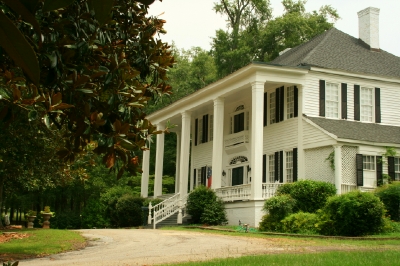
Oakley Park Museum in Edgefield, South Carolina
By 1876, the four year long War Between the States (or Civil War) had been over for 11 years, yet South Carolina - like most of the South - remained under the control of "radical Republican" carpetbaggers and their scalawag allies.

For those not familiar with the terminology of the day, the "radical Republicans" - a name they gave themselves - referred to a wing of the Republican party that favored punishment of Southerners for their role in the War Between the States as opposed to the peaceful reunion favored by Abraham Lincoln. Carpetbaggers were called such by Southerners because they were Northerners who came South after the war to seek their fortunes, often carrying their possessions in luggage made of carpet. Scalawags, also a term coined by Southerners, were Southern individuals who joined with and supported the Carpetbaggers.
Oakley Park, Home of Gen. Martin W. Gary

While some of the individuals who came South after the war were well-intentioned, many were not and graft, corruption and brutal tactics were common during their decade of rule.

In South Carolina, as the election of 1876 approached, a movement grew among the state's Democrats to support former Confederate general Wade Hampton in the race for Governor. A victory by Hampton would break the backs of the radical Republicans and clear the way for a return of local rule to the Palmetto State.

Gary spoke from the balcony in 1876
Maj. Gen. Martin W. Gary, who lived at Oakley Park Mansion in Edgefield, was a key supporter of Hampton in that campaign. A general in the Hampton Legion during the war, Gary had refused to surrender at Appomattox Court House with Gen. Robert E. Lee. At the head of 200 horsemen from South Carolina, he broke through the encircling Union army and road south, eventually escorting President Jefferson Davis as far as South Carolina.

A fierce opponent of Reconstruction rule, Gary organized what became known as the "Red Shirt Campaign" to garner support for Hampton's gubernatorial campaign.

The "Red Shirts" were Democrats who donned red shirts and spread through the countryside to drum up support for Hampton. By election day, his movement had grown to include as many as 85,000 men and he spoke that day to 1,500 of them from the balcony at Oakley Park.

Thanks to the efforts of Gary and his Red Shirts, Hampton won the election and Reconstruction rule came to an end in South Carolina.

The general's home, Oakley Park, is now a museum that displays a rich collection of artifacts from both the War Between the States and Reconstruction.  To learn more, please visit www.exploresouthernhistory.com/oakleypark.

Wednesday, July 31, 2013

Battle of Sunshine Church (149th Anniversary) - Round Oak, Georgia

Sunshine Church Battlefield in Georgia
149 years ago today on July 31, 1864, the Union army suffered one of its greatest disasters of the Atlanta Campaign at a little country chapel called Sunshine Church.

The Battle of Sunshine Church was one Georgia's most dramatic Confederate victories and also holds note as the event that led to the surrender of the highest ranking Union officer to raise the white flag during the entire War Between the States (or Civil War).

Maj. Gen. George Stoneman
On the previous day, Gen. George Stoneman had tried to take Macon as part of a grandiose plan to lead a cavalry raid all the way to the prisoner of war stockade at Andersonville, Georgia. The general believed he would become a hero by liberating the thousands of Union prisoners held at Camp Oglethorpe (Macon) and Camp Sumter (Andersonville), but instead he found Gen. Howell Cobb waiting for him at Macon with a force of very motivated Georgia Reserves and Militia.

At the Battle of Dunlap Hill, just across the Ocmulgee River from downtown Macon, Cobb and his Confederates convinced Stoneman that it would be worse than foolish to try to continue on to Andersonville. After an unsuccessful attack on the Confederate fortifications around the Dunlap farm, Stoneman decided the best course of action would be for him to withdraw from Macon as quickly as possible and get back to the safety of Sherman's main army.  To learn more about that action, please see yesterday's post: http://southernhistory.blogspot.com/2013/07/battle-of-dunlap-hill-149th-anniversary.html.

It was too late for Stoneman, who had earned his coming fate with the terror he had inflicted on helpless women and children on his way to Macon. Confederate cavalry was already moving into position behind him to cut off his route of retreat.

Brig. Gen. Alfred Iverson
About ten miles north of the town of Gray, the Union general and his men found that Confederate Gen. Alfred Iverson has cut them off and was waiting in an area of rough terrain near Sunshine Church.

Iverson had grown up in the area and knew its every ridge and trail. Outriding Stoneman, he had taken his men all the way around the retreating Union column. By the time the Federals reached Sunshine Church, the Confederates were dug in and waiting on a commanding ridge. They had picked the ground and were ready to make the fight.

In one of the greatest cavalry blunders of the War Between the States, Gen. Stoneman now found himself trapped between Iverson's entrenched men and the forces that Cobb was sending north from Macon to attack him from behind. Left with no choice but to try to fight his way through, the Union commander attacked and was driven back.

Iverson's Ridge at Sunshine Church
For hours and late into the night of July 31, 1864, the two forces battled. Iverson had chosen his ground well, however, and by the time the guns finally quieted everyone knew it. Over the pleas of his officers, Stoneman made a desperate decision. He would stay behind and sacrifice himself with part of his command to try to keep the Confederates occupied while Col. Horace Capron and Lt. Col. Silas Adams tried to cut their way out with their brigades.

Stoneman's Raid Marker
Adams and most of his men eventually did reach the safety of Sherman's lines, but Capron's brigade was cornered a few days later at the Battle of King's Tanyard and cut to pieces. Stoneman himself, completely surrounded by Confederate officers and soldiers who were irate over the intentional targeting of civilians by the Union raiders, was left with no choice but to become the highest ranking Union officer to surrender during the entire four years of the war.

Today's Sunshine Church
The Battle of Sunshine Church ended in embarrassing defeat for Federals and the Union general - who barely escaped being hanged from the nearest tree limb by the outraged Confederates - would spend months as a prisoner of war. It would be a long time before Stoneman's cavalry would "tear up the tracks again."

To learn more about the Battle of Sunshine Church, please visit www.exploresouthernhistory.com/sunshinechurch.

Tuesday, July 30, 2013

Battle of Dunlap Hill 149th Anniversary - Macon, Georgia

Dunlap House at Ocmulgee National Monument
149 years ago today, Union and Confederate forces battled at the Battle of Dunlap Hill (also called Dunlap's Farm) at Macon, Georgia.

It was at this battle that Stoneman's Raid, a Union military expedition designed to free the prisoners of war at Andersonville, Georgia, began to unravel. Gen. George H. Stoneman, whose name has been perpetuated in modern times in the lyrics of the song "The Night They Drove Old Dixie Down" would be captured two days later in a disaster that would rank as one of the worst cavalry defeats of the entire Civil War.

Gen. George H. Stoneman
Library of Congress
Stoneman's plan to raid the prisoner of war camps at Camp Oglethorpe in Macon and Camp Sumter at Andersonville was part of the Atlanta Campaign, which raged in the summer of 1864. The Union army of Gen. William Tecumseh Sherman and the Confederate army of Gen. John Bell Hood were engaged in brutal fighting that would determine the fate of Atlanta and in many ways that of the Confederacy itself. One week after Hood had struck out against Sherman at the Battle of Atlanta, Gen. Stoneman approached Sherman with an idea that might shatter Confederate hopes of holding Atlanta.

With 2,104 men and two pieces of artillery, Stoneman proposed that he make a lightning raid south from Atlanta, break the railroad to Macon by which the Confederates were bringing in supplies, and then liberate the thousands of Union prisoners of war being held at Macon and Andersonville.

Confederate Earthworks at Dunlap Farm
Sherman was wary of the idea, but ultimately decided that it was worth a try. He warned Stoneman, however, to focus first on breaking the railroad and not to try to reach the prison camps unless conditions on the ground looked very favorable. Stoneman rode out from Decatur on July 27, 1864, however, which his sights set clearly on Macon and Andersonville.

The Union raiders struck the railroad just as Sherman had ordered, but in the process gave Georgians a preview of the terror they would experience later that year during the March to the Sea. Homes, villages and farms were looted, livestock taken or killed, barns destroyed and civilians terrorized.

Gen. Howell Cobb
Library of Congress
Confederate cavalry fell back ahead of Stoneman's rampaging raiders, skirmishing as they did so. The skirmishing intensified as the head of the Union column approached Macon, with the Confederates showing strong indications that they were preparing to stiffen their spines and give Stoneman a battle as he approached the important city.  The Union general, however, overestimated his own capabilities and severely underestimated those of his waiting opponent, Maj. Gen. Howell Cobb.

Despite signs of stiffening Confederate resistances, Stoneman pushed into the outskirts of Macon on the morning of July 30, 1864, 149 years ago today.

Far from carrying out the lightning raid he had proposed to Sherman, the Union general had given his men too much time to loot and pillage as they came south. In doing so, he gave General Cobb's Confederates too much time to prepare for the coming battle.
Restored Blockhouse at Fort Hawkins

With the 5th Georgia Reserves, units fro the Georgia State Militia, volunteers and every other company he could find, Cobb prepared to defend Macon. Field artillery was placed on the grounds of old Fort Hawkins across the Ocmulgee River from downtown Macon.  Only the blockhouse of the old War of 1812 fort still stood, but Confederate officers used it as a lookout from which they could direct the fire of their guns.

The Confederate infantry took up position in trenches and field fortifications that guarded the approaches to Macon via the old Clinton Road. Much of the battle was fought on land belonging to the Dunlap family and soldiers battled each other on the grounds of the Dunlap House and virtually in the shadow of the massive prehistoric Indian mounds of the Macon Plateau.

The site of much of the fighting is preserved today as part of Ocmulgee National Monument in Macon, which focuses primarily on the massive and amazing prehistoric site. A trail and interpretive signage, however, tell visitors about the Battle of Dunlap Hill and provide access to the yards of the historic Dunlap House, which still stands, as well as the Confederate earthworks that can still be seen in its yard.

Nearby Fort Hawkins is now an archaeological park and although the blockhouse located there during the battle no longer stands, a recreation can be seen along with interpretive signage and other exhibits.

Cannonball House in Macon
In Macon itself, the famed "Cannonball House" is now a museum.  It was struck by a cannonball fired by Union troops as they shelled civilian areas of the city during the battle.

The Georgia reserves and militia fought much harder than Stoneman expected and it soon became clear that he would not take Macon and his dream of becoming the liberator of Andersonville would not be realized.  He ordered a withdrawal back from Macon, leaving the battlefield of Dunlap Hill in the hands of the Confederates.

The ordeal of the Union general and his 2,000 cavalrymen, however, was far from over. He had unleashed a hornet's nest on himself that would come down with full fury two days later at the Battle of Sunshine Church.  I'll post more about that on Wednesday.

To learn more about the Battle of Dunlap Hill, please visit www.exploresouthernhistory.com/dunlaphill.

Wednesday, July 17, 2013

The Battle of Honey Springs (Elk Creek), Oklahoma (July 17, 1863)

War-time Sketch of the Battle of Honey Springs, Oklahoma
150 years ago today on July 17, 1863, having skirmished with Confederate forces at Chimney Mountain, the Union army of Maj. Gen. James G. Blunt reached the battlefield at Honey Springs, Oklahoma. Please click here to read about the preliminary skirmish at Chimney Mountain.

Halting his men at the northern end of today's Honey Springs Battlefield State Historic Site, Blunt gave them time to rest while he and his escort scouted the position of Brigadier General Douglas H. Cooper's Confederate army.

Scene of Heavy Fighting early in the Battle
Although each general believed he was heavily outnumbered, their two effective forces were fairly close in size (about 3,000 men each). The Confederates had a few more men, but many never were engaged and all were experiencing problems with faulty ammunition. Under the rainy conditions that day quite often their guns would not fire.

As he arrived on the field, Blunt discovered that the Confederate army was positioned in thick brush and timber facing open ground across which his men would have to advance. Seeing that Cooper was prepared to fight, he ordered his men into the ranks:

Map showing location of the Battle
Courtesy National Park Service
...After two hours' rest, and at about 10 a.m., I formed them in two columns, one on the right of the road, under Colonel [William R.] Judson, the other on the left, under Colonel [William A.] Phillips. The infantry was in column by companies, the cavalry by platoons and artillery by sections, and all closed in mass so as to deceive the enemy in regard to the strength of my force. In this order I moved up rapidly to within one-fourth of a mile of their line, when both columns were suddenly deployed to the right and left, and in less than five minutes my whole force was in line of battle, covering the enemy's entire front. - Maj. Gen. James G. Blunt, USA.

The Union force then moved forward, with skirmishers out front, and "soon drew their fire."

On the Confederate side of the field, General Cooper waited until the Union troops were within easy range and then opened on them with his artillery:

Elk Creek on the Honey Springs Battlefield
...I rode forward to the position north of Elk Creek where Captain [R.W.] Lee's light howitzer battery had been posted, and found it supported by Colonel Bass' regiment (Twentieth Texas Dismounted Cavalry), by a portion of the Second Cherokee  Regiment, and a body of skirmishers on the right, under command of Captain Hugh Trinn, of the First Cherokee Regiment, the remainder of the Cherokee Regiments being near the Creek. - Brig. Gen. Douglas H. Cooper, CSA.

Things quickly began to go wrong for the Confederates. General Cooper arranged his forces for a defense in detail, which allowed the Federal troops to put more power into position against his front lines. Col. Tandy Walker, meanwhile, mistook his orders and moved far out of position with his Cherokee and Creek troops.

Texas Road on the Honey Springs Battlefield
As Captain R.W. Lee and the men of his battery had watched, the Federals had begun to wheel 12 pieces of artillery into position. Rather than let them get this superior artillery force into position, Lee opened on the guns with his howitzers and a small experimental rifled cannon. A Union cannon was demolished by Confederate fire, but the Federals soon found the range and returned effect fire.

Heavy fighting erupted up and down the line but after two hours, the critical moment of the battle came. Confederate officers mistook a re-positioning of a portion of the Union line and thought a retreat had gun. They ordered an immediate counter-attack. The Confederates surged forward to within just 25 paces of the Union lines when the 1st Kansas Colored Volunteers suddenly unleashed a deadly volley on them. The charge was shocked to a stop as dozens of men fell dead and wounded.

Site of the Elk Creek Bridge on the Battlefield
At this point the Confederate line began to fall back for the crossings of Elk Creek and General Cooper ordered his men to withdraw. A force of Texas soldiers held the vital Elk Creek Bridge on the Texas Road under heavy fire, giving Cooper time to withdraw most of his men.

The Southern forces continued to fight, but their faulty ammunition caused so many problems that they began to lose hope. A retreat degenerated into a rout.

As total disaster seemed about to overwhelm the Confederate army, Col. Tandy Walker suddenly arrived on the field with his Cherokee and Choctaw soldiers. Cooper immediately ordered them to charge:

Site of Walker's Charge at Honey Spring
...With their usual intrepidity the Choctaws went at them, giving the war-whoop, and succeeded in checking the advance of the enemy until their force could be concentrated and brought up. The Choctaws, discouraged on account of the worthless ammunition, then gave way, and were ordered to fall back with the others in the rear of the train, which had moved off in an easterly direction, covered by our own troops.... - Brig. Gen. Douglas H. Cooper, CSA.

The "Gettysburg of the West" had been fought - and lost - by the Confederates and the end of the battle found them in full retreat for the Canadian River and the reinforcement column then coming up under General Cabell.  Cooper ordered his supplies that could not be saved set afire and by the time the Federals occupied their camps, there was little left to capture. General Blunt did report taking one piece of artillery, 200 stand of arms, 15 wagons and one stand of colors.

Monuments at Honey Springs Battlefield
The Battle of Honey Springs (sometimes called the Battle of Elk Creek) shifted the war in the far west from the Cherokee and Creek Nations all the way south into the Choctaw Nation. It opened the door for Blunt's capture of Fort Smith in September. Great misery would follow in the Creek, Choctaw and Chickasaw Nations as the Union troops pushed south over coming months and thousands of American Indian refugees would flee south for the Texas line, the smoke from their burning homes filling the skies behind them.

The battle will be reenacted in November, when the weather is a little cooler, and a major weekend of activities is planned for the 150th anniversary commemoration at the same time.

To learn more, please visit www.exploresouthernhistory.com/honeysprings1.


Fight at Chimney Mountain, Oklahoma (July 17, 1863)

Monuments at Honey Springs Battlefield
150 years ago today (July 17, 1863), Union forces continued their advance on the Confederate camp at Honey Springs in the Creek Nation of what is now Oklahoma. Read yesterday's post about the beginning of the advance.

Confederate commander Brig. Gen. Douglas H. Cooper had ordered Col. Tandy Walker's 1st Cherokee and Choctaw Regiment up to Chimney Mountain the previous afternoon, along with Capt. L.E. Gillett's squadron of Texas cavalry. They were there to watch for the approach of the Union column and resist its approach to the main Southern camps along Elk Creek at Honey Springs in the Creek Nation.

Chimney Mountain, Oklahoma (upper left)
Located just southwest of today's city of Muskogee, Chimney Mountain is an isolated but impressive height that offers a commanding view of the surrounding area. The roads from the Creek Agency and Fort Gibson (then called Fort Blunt) intersected here, creating an ideal choke point where Confederate troops could observe and delay a Union advance in force:

     About daylight on the morning of the 17th, the advance of the enemy came in sight of the position occupied by the Choctaws and Texans; commenced a brisk fire upon them, which was returned and followed by a charge, which drove the enemy back upon the main column. Lieutenant Heiston reported the morning cloudy and damp, many of the guns failing to fire in consequence of the very inferior quality of the powder, the cartridges becoming worthless even upon exposure to the damp atmosphere. - Brig. Gen. Douglas H. Cooper, CSA (August 12, 1863).


The primary force engaged by the Confederates at Chimney Mountain was the Sixth Kansas Cavalry. Lt. Col. William T. Campbell reported that the fighting began just as the sun was rising:

Brig. Gen. D.H. Cooper, CSA
...I, with my command, was ordered to take the advance, Company F, Captain Gordon, being advance guard. About daybreak the advance came up with the enemy in considerable force, posted on a rise of ground, and near the timber. The captain immediately formed his men and opened a brisk fire on the enemy, but was compelled by superior numbers to fall back. - Lt. Col. William T. Campbell, USA (July 19, 1863).

Campbell brought up the full force of his regiment and the Confederates began to fall back. According to General Cooper, a heavy rain began to fall as the Union resistance stiffened, causing even more problems with the inferior ammunition with which his men had been equipped. Unable to fire their weapons, they began to fall back "slowly and in good order to camp, for the purpose of obtaining a fresh supply of ammunition and preparing for the impending fight."

The Sixth Kansas Cavalry lost 1 killed and 5 wounded (2 minor) in the skirmish at Chimney Mountain. Confederate losses were not reported.

Place where Union forces halted prior to the battle.
With Walker withdrawing his command back to the main camp at Elk Creek, the Union advance resumed. A few Confederates were left as skirmishers at Prairie Mountain, 3 miles north of Cooper's main position.

When the Federals came within sight of these men, the halted to rest briefly and deploy for battle. Lt. T.B. Heiston, Cooper's aide-de-camp, commanded the skirmishers and soon reported back to the Confederate commander that the Union force was deploying and appearing to number 4,000 men. The actual number was around 3,000.

Where the Confederate line formed in the brush
The Union commander, Maj. Gen. James G. Blunt, rode forward with his escort to to examine the Confederate position:

While the column was closing up, I went forward with a small party to examine the enemy's position, and discovered that they were concealed under the cover of brush awaiting my attack. I could not discover the location of their artillery, as it was masked in the brush. While engaged in this reconnaissance, one of my escort was shot. - Maj. Gen. James G. Blunt, USA (July 26, 1863).

The two main forces were now within sight of each other and began to deploy for the coming engagement. I will have more on the Battle of Honey Springs later today in a second post.  Until then, you can read more at www.exploresouthernhistory.com/honeysprings1.

Tuesday, July 16, 2013

The March to Honey Springs, Oklahoma (July 16, 1863)

Civil War ruins and earthworks at Fort Gibson
One of the most dramatic encounters of the Civil War west of the Mississippi River began to take shape 150 years ago today in the Cherokee Nation of what is now Oklahoma.

Maj. Gen. James G. Blunt, commander of the U.S. Army's District of the Frontier, had arrived at Fort Blunt (better known as Fort Gibson) in the Cherokee Nation of what is now Oklahoma on July 11, 1863. The Arkansas River was flooded and blocked his command from the Confederate forces of Brig. Gen. Douglas H. Cooper camped 25 or so miles to the south in the Creek Nation at the Honey Springs of Elk Creek.

Water flows from Honey Springs, Oklahoma
Informed that Cooper commanded 6,000 Confederates and that Brigadier General "Old Tige" Cabell was on the way to join him with another 3,000 men, Blunt decided to strike before the Confederates could join forces. Accordingly he ordered his men to begin building boats for a crossing and started scouting for a way to get across the river without provoking a fight with the Confederate sentries that picketed the opposite shore.

Maj. Gen. James G. Blunt, USA
Cooper's command included nowhere near 6,000 men - it was actually about half that - but Blunt had no way of knowing the accuracy of the intelligence he had received. The size of the column reinforcements under Cabell, advancing from Fort Smith, also was wildly overestimated.


On July 15th, as Blunt's 3,000 men neared completion of their boats, General Cooper received word that the Arkansas River was beginning to drop and had become fordable above the mouth of the Verdigris River and that Union officers could be seen examining the fords. At midnight, Blunt began to move:

At midnight of the 15th, I took 250 cavalry and four pieces of light artillery, and marched up the Arkansas river about 13 miles, drove their pickets from the opposite bank, and forded the river, taking the ammunition chests over in a flat-boat. I then passed down on the south side, expecting to get in the rear of their pickets at the mouth of Grand River, opposite this post, and capture them, but they had learned of my approach and had fled. I immediately commenced crossing my forces at the mouth of Grand River in boats.... - Maj. Gen. James G. Blunt, USA (July 26, 1863).
Brig. Gen. Douglas H. Cooper, CSA

Gen. Cooper told a similar story of the crossing. According to his version, news reached him early on the 16th that Federals were crossing in force at the Creek Agency west of Fort Gibson. His scouts told him the Union force numbered between 200 and 300 and were moving from the Creek Agency down the south bank of the Arkansas toward the fords near Fort Gibson to drive off his pickets. He believed, however, that his pickets were still in position watching for any large movement of the Federals.

Accordingly, he ordered Col. Tandy Walker forward with the First Cherokee and Choctaw Regiment, along with Captain L.E. Gillett and his squadron of Texas cavalry, to take up a position between Elk Creek and the Arkansas River, where the roads from the Creek Agency and Fort Gibson intersected at Chimney Mountain.Walker was to call in the pickets from the south bank of the Arkansas and send out detachments to watch both of the roads leading to Chimney Mountain.
Col. Tandy Walker, CSA

As Walker and Gillett moved forward with the Cherokee, Choctaw and Texas troops, Blunt's command continued its crossing of the Arkansas River at the mouth of the Grand. The crossing continued all day on the 16th - 150 years ago today - but by 10 p.m. the long column of 3,000 Federals had started south on the road to Chimney Mountain and Elk Creek.

The Battle of Honey Springs, also called the Battle of Elk Creek, would take place the next day. Oklahoma's largest battles of the War Between the States, it has been called the "Gettysburg of the West" by some writers.

I will post more about the battle tomorrow in commemoration of its 150th anniversary.  Until then, you can read more at  www.exploresouthernhistory.com/honeysprings1.


Monday, July 8, 2013

The Fall of Port Hudson, Louisiana - July 9, 1863


Peace Monument at Port Hudson, Louisiana
The longest siege of the War Between the States (or Civil War) came to an end 150 years ago today at Port Hudson, Louisiana.

For more than six weeks, Major General Franklin Gardner and a Confederate garrison of fewer than 4,000 men had kept at bay a Union army of more than 30,000 soldiers. In the process, they killed or wounded more of their enemies than were included their own command. Had Vicksburg not fallen five days earlier, they might well have continued to fight even longer.

To learn more about the fighting at Port Hudson, please read these previous articles first:

Earthworks defended by Alabama and Arkansas units
On July 7, 1863, however, Union soldiers in the trenches surrounding the Mississippi River bastion north of Baton Rouge began to yell across the lines to their Confederate counterparts that Vicksburg had fallen. The news was passed up to General Gardner who penned a letter that night to the opposing commander, Major General Nathaniel P. Banks, seeking official confirmation.

Banks replied early on the morning of July 8th by declining a truce to discuss the surrender of Port Hudson, but also enclosing a dispatch he had received from General Ulysses S. Grant the previous day notifying him of the surrender of Vicksburg.

Union dead at Port Hudson National Cemetery
Because the primary purpose of the Confederate bastion at Port Hudson was to defend the stretch of of the Mississippi River that began at the nearby mouth of the Red River so that supplies could continue to flow from west of the Mississippi to the railroad at Vicksburg, the strategic value of the position ended when Vicksburg fell. Gardner accordingly wrote back to General Banks:

Having defended this position as long as I deem my duty requires, I am willing to surrender to you, and will appoint a commission of three officers to meet a similar commission appointed by yourself at 9 o'clock this morning, for the purpose of agreeing upon and drawing up the terms of surrender; and for that purpose I ask for a cessation of hostilities. Will you please designate a point outside of my breastworks where the meeting shall be held for this purpose? - Maj. Gen. Franklin Gardner, CSA (July 8, 1863).


Confederate garrison flag that flew over Port Hudson
Banks replied immediately by informing Gardner that he would direct that active hostilities end until further notice. He designated Brig. Gen. Charles P. Stone, Col. Henry W. Birge and Lt. Col. Richard B. Irwin to meet with three officers of Gardner's choice.  

The Confederate commander appointed Col. I.G.W. Steedman, Col. Henry W. Birge and Lt. Col. Marshall J. Smith to represent him in the surrender negotiations. The two groups of officers agreed to relatively simple terms and both commanding generals approved the agreement. The hour set for the official surrender of Port Hudson was 7 a.m. on July 9, 1863, 150 years ago today.

Confederate flag dug up at Port Hudson after the battle.
The surrender took place as expected. The Confederates stacked their weapons and furled their flags, with one exception. A Southern flag would later be dug up at Port Hudson where it had been buried prior to the surrender. It is now on display in the museum at Port Hudson State Historic Site, along with the official garrison flag of the post.

Although the Confederate officers agreed to surrender themselves and their men to become prisoners of war, General Banks ordered that the enlisted men and non-commissioned officers be paroled and released. The officers were sent away to northern prisoner of war camps.

Union losses in the siege of Port Hudson totaled roughly 10,000. These included 5,000 men who were killed and wounded in the disastrous assaults on the Confederate lines, as well as another 5,000 men who died of disease during the siege. Confederate losses were less than 1,000, including around 250 men who died of disease.

To learn more about Port Hudson State Historic Site, which preserves a large area of the battlefield, please visit www.exploresouthernhistory.com/porthudson.