Showing posts with label south carolina. Show all posts

Saturday, June 28, 2014

4th of July Fireworks are underway!

4th of July Fireworks for 2014 are underway!
4th of July fireworks are underway across the South!

Tonight (Saturday, 6/28/2014) is the first big night of the week-long celebration, with shows scheduled for Alabama, Arkansas, Mississippi, North Carolina, Oklahoma, South Carolina, Tennessee, Texas and Virginia. More shows continue tomorrow with the big weekend set to get underway on Wednesday, July 3rd.

As always, you can check out locations, times and dates for the best fireworks in each state in the South by visiting www.exploresouthernhistory.com/fireworks.


Sunday, August 11, 2013

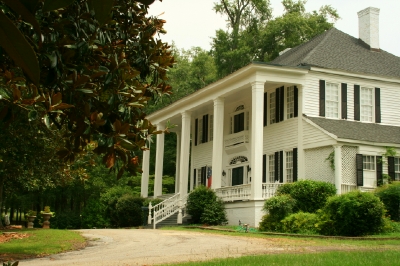
Oakley Park and the end of Carpetbag Rule in South Carolina


Oakley Park Museum in Edgefield, South Carolina
By 1876, the four year long War Between the States (or Civil War) had been over for 11 years, yet South Carolina - like most of the South - remained under the control of "radical Republican" carpetbaggers and their scalawag allies.

For those not familiar with the terminology of the day, the "radical Republicans" - a name they gave themselves - referred to a wing of the Republican party that favored punishment of Southerners for their role in the War Between the States as opposed to the peaceful reunion favored by Abraham Lincoln. Carpetbaggers were called such by Southerners because they were Northerners who came South after the war to seek their fortunes, often carrying their possessions in luggage made of carpet. Scalawags, also a term coined by Southerners, were Southern individuals who joined with and supported the Carpetbaggers.
Oakley Park, Home of Gen. Martin W. Gary

While some of the individuals who came South after the war were well-intentioned, many were not and graft, corruption and brutal tactics were common during their decade of rule.

In South Carolina, as the election of 1876 approached, a movement grew among the state's Democrats to support former Confederate general Wade Hampton in the race for Governor. A victory by Hampton would break the backs of the radical Republicans and clear the way for a return of local rule to the Palmetto State.

Gary spoke from the balcony in 1876
Maj. Gen. Martin W. Gary, who lived at Oakley Park Mansion in Edgefield, was a key supporter of Hampton in that campaign. A general in the Hampton Legion during the war, Gary had refused to surrender at Appomattox Court House with Gen. Robert E. Lee. At the head of 200 horsemen from South Carolina, he broke through the encircling Union army and road south, eventually escorting President Jefferson Davis as far as South Carolina.

A fierce opponent of Reconstruction rule, Gary organized what became known as the "Red Shirt Campaign" to garner support for Hampton's gubernatorial campaign.

The "Red Shirts" were Democrats who donned red shirts and spread through the countryside to drum up support for Hampton. By election day, his movement had grown to include as many as 85,000 men and he spoke that day to 1,500 of them from the balcony at Oakley Park.

Thanks to the efforts of Gary and his Red Shirts, Hampton won the election and Reconstruction rule came to an end in South Carolina.

The general's home, Oakley Park, is now a museum that displays a rich collection of artifacts from both the War Between the States and Reconstruction.  To learn more, please visit www.exploresouthernhistory.com/oakleypark.

Wednesday, July 3, 2013

Fireworks across the South Tonight (7/3/2013)

4th of July Fireworks explode over the South
Courtesy Pine Bluff Festival
Fireworks are set to launch at locations all across the South tonight!  Weather conditions could cause issues in some areas, so be sure to check local conditions before heading out!

Here are some highlights of what is happening and where its happening tonight!


Alabama

Major fireworks displays are set for tonight - weather permitting - in Chelsea, Fort Rucker, Jacksonville and Montgomery! A major highlight is the Fort Rucker Freedom Fest. The post plans to go forward with its fireworks, even though many military bases in the South have cancelled their annual shows.

Please click here to see the full list of fireworks in Alabama for July 3rd and 4th with times and locations.


Arkansas

The skies of the Natural State will light up tonight with fireworks in Bella Vista, Calico Rock, De Queen, Hot Springs, Paris and Rogers. The Hot Springs event features a concert by Lee Greenwood of "I'm proud to be an American" fame.

Please click here for the full list of fireworks in Arkansas for July 3rd and 4th.


Florida

Florida's 4th of July fireworks for this year begin with the Old Apalachicola Independence Day in Apalachicola and fireworks in Aventura.  The Apalachicola event - weather permitting - will feature a parade, ice cream social, live music and more.

Please click here for Florida's fireworks for this July 3rd and 4th.


Georgia

Georgia's 4th of July celebrations launch into high gear tonight with events in Atlanta, Cumming, Dawsonville, Forsyth, McCaysville/Copperhill, Kennesaw, Tifton, Villa Rica and Woodbury. The Tifton event includes a variety of activites at the Georgia Museum of Agriculture and Historic Village!

Please click here for a full list of Georgia fireworks for July 3rd and 4th.


Kentucky

Fireworks launch tonight from locations all over Kentucky.  Events are set for Bowling Green, Dawson Springs, Gilbertsville, Louisville, Madisonville, Somerset and Winchester. Among the highlights are the first night of Louisville's two night Waterfront Independence Festival, the Kentucky Lake Big Bang in Gilbertsville and the Thunderfest Independence Day Celebration at the National Corvette Museum in Bowling Green.

Please click here for a full list of Georgia fireworks for July 3rd and July 4th!


Louisiana

Four major fireworks shows are set for Louisiana tonight. Events are set in Jennings, Metarie, Ponchatoula and Youngsville. Highlights include the Uncle Sam Jam at Lafreniere Park in Metarie and Youngsville's Independence Day Celebration which will include both fireworks and hot air balloon rides!

See the full list of Louisiana fireworks for July 3rd and 4th by clicking here!


Mississippi

Fireworks take place in Pearl, Mississippi, tonight after the 7 p.m. baseball game between the Mississippi Braves and the Mobile Bay Bears.

Click here for the full list of Mississippi fireworks set for July 3rd and July 4th.


North Carolina

The Independence Day celebration gets underway in North Carolina with nearly one dozen events tonight (July 3rd).  Fireworks displays are set for Asheville, Carolina Beach, Charlotte, Cherryville, Harrisburg, Mooresville, Statesville and Wake Forest (the city, not the school).

Click here for 2013's list of North Carolina Fireworks set for July 3rd and 4th.


Oklahoma

Big fireworks events are set for Oklahoma tonight, including Red White & Boom in Oklahoma City.  Events are also set for Claremore, Talihina and Yukon, with more to come tomorrow!

Check out this year's list of Oklahoma Fireworks for July 3rd and 4th.


South Carolina

Fireworks will launch in Cheraw and Columbia tonight, with South Carolina's main list of 4th of July celebrations planned for tomorrow.

Click here for South Carolina's fireworks for July 3rd and July 4th.


Tennessee

There is a long list of fireworks set for Tennessee tonight, with more to follow tomorrow night!  Fireworks will launch tonight in Bartlett, Chattanooga, Clarksville, Collierville, Collegedale, Copperhill/McCaysville, Dandridge, Hendersonville, Millington and Waynesboro.

Please click here to see Tennessee's fireworks list for July 3rd and July 4th.


Texas

The Lone Star State kicks its 4th of July celebration into high gear tonight with music, events, airshows, fireworks and more!  The Atlanta Rhythm Section will perform live in Arlington, followed by fireworks, with events also taking place in Addison, Coppell, Farmers Branch, Fort Worth, Gilmer, Irving, Sachse and Sherman.

Click here to see the full list of Texas fireworks for July 3rd and July 4th.


Virginia

Fireworks start launching in Virginia shortly after dark tonight, with events scheduled for Chesapeake, Doswell, McGaheysville, Richmond, Ridgeway and South Hill.  More will follow tomorrow!

Click here to read the full list of Virginia fireworks for July 3 & 4, 2013!


Don't forget you can check the full list of fireworks from all Southern states online at www.exploresouthernhistory.com/fireworks.


Saturday, June 29, 2013

4th of July Fireworks continue Tonight!

Fireworks over Arkansas
Courtesy Pine Bluff Festival Association
4th of July Fireworks continue around the South tonight, with a wide range of events scheduled for the next seven days.

My annual list of 4th of July Fireworks in the South is now online at www.exploresouthernhistory.com/fireworks, so check it out for a state by state guide to the best displays!

Here are some highlights for you from this weekend's planned events:


Alabama (June 29 & 30, 2013)

Boaz, Cedar Bluff, Columbiana, Thomasville and Tuscumbia will all host events on Saturday and Wilsonville's annual God & Country Celebration is set for Sunday.

To learn more about these and other 4th of July Fireworks Events in Alabama for 2013, please visit www.exploresouthernhistory.com/alabamafireworks.


Arkansas (June 29 & 30, 2013)

Texarkana's big Sparks in the Park will take place on Saturday night at Bobby Ferguson Park. Gates open at 4 p.m.for food, activities, contests and more. The fireworks will launch at 9:30 p.m.

Springdale will launch its Fireworks at the Cross at the CrossChurch Pinnacle Hills Campus on Sunday night.  Events begin at 5 p.m. with live music, outdoor baptisms and more. The fireworks go up at dark.

To learn more about this year's 4th of July Fireworks in Arkansas, please visit www.exploresouthernhistory.com/arkansasfireworks.


Florida

Florida's events don't get started until July 3rd, but you can check out the schedule of planned fireworks for the Sunshine State at www.exploresouthernhistory.com/floridafireworks.


Georgia  (July 1, 2013)

Georgia's fireworks for this year get underway on Monday, July 1st, as Auburn (GA) hosts its annual fireworks in the downtown area. The skies light up at dark.

To learn more about the full list of this year's 4th of July fireworks in Georgia, please visit www.exploresouthernhistory.com/georgiafireworks.


Kentucky (June 29, 2013)

Kentucky begins to light up its skies on Saturday night with the Briggs & Stratton Fireworks Extravaganza in Murray. Fireworks launch at 9:30 p.m. on the 29th in the area around Kroger, Wal-Mart and Lowes.

The full list of fireworks in Kentucky is available at www.exploresouthernhistory.com/kentuckyfireworks.


Louisiana (June 29, 2013)

Lake Arthur leads the way this year in Louisiana with its Lake Arthur Freedom Fest on Saturday (June 29th). The gates of Lake Arthur Park open at 8 a.m. for a day of fun.  The Blessing of the Fleet is set for 3 p.m., followed by music from Jamie Bergeron & the Kickin' Cajuns, Travis Matte & the Kingpins and the Bon Journeys.  The fireworks launch at 8:30 p.m.  Admission is $5 with kids 5 and under admitted free.

See the full list of this year's Louisiana fireworks at www.exploresouthernhistory.com/louisianafireworks.


Mississippi (June 30, 2013)

Mississippi's 4th of July Fireworks for 2013 get started on Sunday night in Hattiesburg and Brandon (Ross Barnett Reservoir).

Temple Baptist Church in Hattiesburg hosts Celebrate America on Sunday night (June 30th). The event begins with a community-wide picnic and fun at 6:30 p.m., followed by the fireworks at 9:00 p.m.

The Annual Independence Day Celebration at Ross Barnett Reservoir also takes place on Sunday. Events begin at 5 p.m. at Lakeshore Park and Old Trace Park in Brandon.  There will be live music at 6 p.m., a boat parade at 8 p.m. and fireworks at 9 .m.

Check out Mississippis's complete list of 4th of July Fireworks at www.exploresouthernhistory.com/mississippifireworks.


North Carolina 

Events don't get started in North Carolina until July 3rd, but you can check out the full list of events in the Tarheel State here:  www.exploresouthernhistory.com/ncfireworks.


Oklahoma (June 29, 2013)

The skies over Oklahoma City come alive on Saturday night (June 29th) with the annual Stars & Stripes River Festival. Taking place in the Boathouse District, the event features river sports, games, activities and more throughout the day followed by fireworks at dark.

Check out the complete list of Oklahoma's fireworks for this year at www.exploresouthernhistory.com/okfireworks.


South Carolina (June 29, 2013)

The big 4th of July Celebration and Boat Parade takes place at South Carolina's Lake Murray on Saturday (June 29th). A popular event in the Midlands, the boat parade takes place at 12 noon followed by the fireworks at dark.

See South Carolina's complete list of 4th of July Fireworks at www.exploresouthernhistory.com/scfireworks


Tennessee (June 29, 2013)

Tennessee's 4th of July Fireworks will begin with three events on Saturday night (June 29th).

Alcoa hosts its FreedomFest on Saturday with fireworks at dark. Andersonville's Sequoyah Marina on Norris Lake is home to Fire on the Water which features food, fun and fireworks. Byrdstown's Independence Day Celebration takes place in the parking lot across from Town Hall on Saturday night and begins with a benefit for Our Troops at 5 p.m., followed by music and games.  The fireworks begin at 9 p.m.

Check out the full list of 4th of July Fireworks in Tennessee this year at www.exploresouthernhistory.com/tnfireworks.


Texas (June 29 & 30, 2013)

Texas begins its 4th of July Fireworks on Saturday and Sunday nights, June 29th and 30th.

Allen's annual Market Street Allen USA Celebration is set for Saturday at Celebration Park. Former Styx  lead singer Dennis DeYoung is among the performers set to entertain the crowds. Music, fun, activities, food and more begins at 4 p.m., followed by the fireworks at dark.

Parker's Celebrate Freedom event takes place at Southfork Ranch on Saturday. The gates open at 8 a.m. for activities, food, fun and more. Live music begins at 10 a.m. and the fireworks will launch at Dark.

Rockwall's Freedom Fest 2013 will take place on Sunday at The Harbor. Food, fun, entertainment and activities kick off at 4 p.m. and will be followed by the fireworks at dark.

Check out the full list of Texas 4th of July Fireworks for this year at www.exploresouthernhistory.com/texasfireworks.


Virginia 

Things don't get going in Virginia until July 3rd, but you can check out the full list of Virginia 4th of July Fireworks for 2013 at www.exploresouthernhistory.com/virginiafireworks.


Remember, you can access the full list for all states anytime at www.exploresouthernhistory.com/fireworks.


Wednesday, July 11, 2012

The Battle of Kings Mountain - Blacksburg, South Carolina

Ferguson's Cairn (right) and the crest of Kings Mountain
Thomas Jefferson called the Battle of Kings Mountain the "turn of the tide of success" in the cause for American Independence.

Outraged by threats made against their lives, homes and families, a large force of "Overmountain Men" came across the Blue Ridge from Tennessee and trapped 1,100 British soldiers on the top of Kings Mountain in South Carolina. By the time the fighting was over, 225 British soldiers and Loyalist allies had been killed, 163 were wounded and 716 were prisoners of war.

Kings Mountain National Military Park
The bloody battle ended the threat of Major Patrick Ferguson and his Loyalist (Tory) Battalion to the Patriot settlers in the Carolina backcountry and the frontier families living across the mountains in what is now Tennessee. The disaster dealt to Ferguson's command also proved to the British commander, Lord Cornwallis, that he could not pacify South Carolina by force. He had hoped to suppress the Revolution there by forcing residents to either swear their loyalty to King George III or suffer the consequences.

Rocky Slopes of Kings Mountain
As Thomas Jefferson noted, the Battle of Kings Mountain was the first in a series of bloody disasters handed to Cornwallis and his army by Patriot forces in the South. It was followed three months later by Daniel Morgan's stunning victory over Banastre Tarleton at the Battle of Cowpens and a few months thereafter the bloodletting at the Battle of Guilford Courthouse. Combined these battles put Cornwallis on the road to Yorktown, where he was trapped and defeated by George Washington.

The site of the battle is now preserved at Kings Mountain National Military Park near Blacksburg, South Carolina. The park features a paved interpretive trail that winds through key areas of the battlefield and across the crest of the mountain. It also has monuments, the stone cairn where Patrick Ferguson is buried and a recently remodeled museum that includes outstanding displays on the battle.

To learn more, please visit www.exploresouthernhistory.com/KingsMountain1.

Tuesday, April 12, 2011

The Bombardment of Fort Sumter - 150 Years Ago Today

Fort Sumter National Monument
NPS Photo
At 4:30 a.m. on April 12, 1861, 150 years ago today, a mortar shell rose high in the air over Charleston Harbor in South Carolina and exploded. As the flames and fragments rained down on the island citadel of Fort Sumter, the men of both sides knew that the War Between the States had begun.

One by one, Confederate cannon ringing the harbor opened fire. Inside the brick fortress, U.S. soldiers hunkered down as shot and shell impacted with the masonry and shook the ramparts to their foundations. They would eventually return fire, even targeting a hotel where Captain Abner Doubleday claimed he had once received poor service, but remarkably no one would die on either side.

42-Pounder at Fort Sumter
The Bombardment of Fort Sumter continued for 34 straight hours. Sections of wall well away and the wooden parts of the fort, particularly the barracks, caught fire. Dense smoke settled over the fort and the men inside held wet clothes over their noses and mouths so they could breathe and continue to fight. Some of them had fought in the War with Mexico or in the Seminole Wars, but they had never experienced anything like this.

In Charleston, citizens gathered on the rooftops and watched from the Battery as the shot and shells arced over the harbor. Each explosion brought cheers. South Carolina had waited a long time for this day.

Among the Confederate commanders, there were mixed emotions. Their duty was not so much to the new country that had been formed in Montgomery, Alabama in February of 1861 as it was to their home states and to their mutual identity as Southerners. But they had served with Major Robert Anderson and many of the other men in Fort Sumter, had shared good times and danger together, and they regret mixed with exhiliration that the long-awaited battle was finally underway.

Fort Sumter
Knowing that his position was hopeless but that his duty was to defend the flag of his nation, Major Anderson held out against all odds. Even though his position was under fierce attack, he did his best to preserve the lives of his officers and men. He ordered them not to man the fort's upper level of guns where they would be more exposed to the Confederate fire, although in the midst of the bombardment a soldier defied those orders and dashed up the stairs and touched off the cannon there.

Fort Sumter would surrender on the next day, April 13, 1861. More than 600,000 men would die and more than 1,000,000 would be wounded before Anderson would again raise his flag over the walls of Fort Sumter.

To learn more about Fort Sumter National Monument, which preserves the ruins of the historic fort, please visit www.exploresouthernhistory.com/fortsumter.

Sunday, December 26, 2010

The Evacuation of Fort Moultrie - December 26, 1860

Fort Moultrie, South Carolina
One of the first military events of the Civil War took place 150 years ago tonight when Major Robert Anderson and the U.S. garrison of Fort Moultrie, South Carolina, slipped across Charleston Harbor and occupied Fort Sumter.

It was a move, in Anderson's words, meant to "prevent the effusion in blood." In reality, it would lead to the outbreak of the bloodiest war in American history.

Fort Moultrie, located on Sullivan's Island across from Charleston, had long been the primary post for U.S. troops maintaining and garrisoning the forts that guarded the South Carolina harbor. Soldiers from William Tecumseh Sherman to Edgar Allen Poe had been stationed there and during the 1830s it had served as the prison for the famed Seminole warrior Osceola. His grave, in fact, can still be seen just outside the walls of the old brick fort.

1860 Sketch of Evacuation of Fort Moultrie
When South Carolina became the first Southern state to secede from the Union on December 20, 1860, Fort Moultrie was held by a small garrison of men from two companies of the First U.S. Artillery. A report of the time listed their number as no more than 65 in all. They were commanded by Major Robert Anderson, a Kentucky-born graduate of the U.S. Military Academy at West Point who had served in the U.S. Army for more than 30 years and been severely wounded at the Battle of Molino del Rey during the Mexican War.

The author of a textbook on field artillery tactics, Anderson knew he could not hope to hold Fort Moultrie against any determined assault by South Carolina militia. The fort had been designed to sweep the channel of the harbor and its land defenses were minimal. If he hoped to maintain the U.S. presence in Charleston Harbor, his one option was to move his men across the channel to Fort Sumter.

Fort Sumter in distance from Fort Moultrie
Still incomplete in 1860, Fort Sumter was located on a small man-made island in the harbor and could be much more easily defended since any attacking force would have to approach by boat under the guns of the fort. Although the conditions there were much less comfortable than at Fort Moultrie, Anderson made the decision to move his men over.

Led by Anderson in person, the bulk of his force went over to Fort Sumter in boats on the night of December 26, 1860. Left behind were twelve men and a surgeon, commanded by Captain J.G. Foster of the engineers, who were ordered to spike the heavy guns in Fort Moultrie and destroy their carriages. This work was accomplished during the night of the 26th and the fort's flagstaff was also cut down.

To learn more about Fort Moultrie, now a national park area and open to the public daily, please visit www.exploresouthernhistory.com/SCMoultrie1.

Monday, October 18, 2010

The Edgefield Ghost - A Poltergeist in Antebellum South Carolina

Ghost stories abound in the South, but few are as well documented as an incident that took place in the Edgefield District of South Carolina in 1829. It was known at the time as the Edgefield Ghost.

The strange encounter took place in the home of Isaac Burnett and began as strange sounds heard in and around the house, but gradually escalated to what newspapers of the time described as a full blown paranormal encounter. The ghost was not seen, but would routinely talk, answer questions and even whistle songs. Word of the haunting quickly spread through the Edgefield District and scores of other individuals came to see it for themselves. The ghost, or whatever it was, obliged, talking to everyone from neighbors to an old time fire and brimstone Baptist preacher.

The Edgefield Ghost was widely documented in letters and newspapers of the time and continued to be mentioned by editors for decades to come.

The site of the haunting, which gradually faded away in the 1830s, is now in Greenwood County, South Carolina, roughly between the cities of Edgefield and Greenwood. The Burnett house is long gone, as are all traces of the old farm, with only woods and overgrown fields marking the site.

To learn the full story of this remarkable event, please visit www.exploresouthernhistory.com/edgefieldghost.

Wednesday, October 21, 2009

The Edgefield Ghost: A 19th Century Poltergeist Incident in South Carolina


With Halloween approaching, I thought you might enjoy learning about some unusual Southern ghost stories over the next week or so.

Let me say first that everyone can make their own mind up about ghosts. My interest in them is totally from a historical perspective. I think old ghost stories are interesting bits of our culture as Southerners, especially those handed down from long ago.

Perhaps the best known such story of the early 19th century was the strange case of the Edgefield Ghost, so named because it appeared in the Edgefield District of South Carolina. The story dates back to 1829 and it was widely reported in America's newspapers that year.

In brief, the ghost first made its appearance when Isaac Burnett heard strange sounds near his one-room house in a rural area near what is now known as Sheppard's Crossroads, a small community about 15 miles northwest of the town of Edgefield. At first the voice imitated normal sounds heard around the farm, a spinning wheel, ducks or hens clucking. Over time, however, it began to communicate with members of the family.

The ghost took an unusual interest in Martha Burnett, the 10-year-old daughter of the homeowner. Unlike the other members of her family, however, Martha had no interest in communicating with the strange voice. In fact, the ghost terrified her. She consulted with a friend who recommended that she memorize a Bible scripture to repeat to the ghost any time it attempted to communicate with her. This led to a confrontation between the two, but the strategy worked.

Others, however, continued to communicate with the strange spirit. Among those who talked with it in 1828-1829 were a Baptist minister, a physician and a state legislator. One thing that quickly became apparent about the ghost was that it became angry and withdrew anytime someone mentioned Christianity or Jesus Christ.

To learn more about this bizarre and well-documented story, please visit www.exploresouthernhistory.com/edgefieldghost.

Monday, May 25, 2009

Memorial Day, Part Six - Cowpens National Battlefield, South Carolina


We conclude our special Memorial Day series in South Carolina, where on January 17, 1781, the tide of the American Revolution was turned when General Daniel Morgan achieved a brilliant victory over the British at a place called the Cowpens.

Daniel Morgan was the epitome of an American hero of the 18th century. A rough and ready frontiersman who enjoyed fist fighting, he had served as a wagoner for the British army during the French and Indian War. While in the service he somehow upset a British officer who struck him with the flat of his sword. Morgan responded by knocking the man out. As a result he was sentenced to 500 lashes, a severe and bloody beating.

According to Morgan, though, the drummer counting out the lashes miscounted and he received only 499. He delighted in telling his men during the American Revolution that the British still owed him one. The British may have owed him a lash, but he gave them one back at Cowpens.

Cowpens took place as Morgan and his commanding officer, General Nathaniel Greene, arrived in the South to try to salvage what was left of the situation there. Charleston had fallen to the British and then General Horatio Gates had been smashed at Camden, South Carolina. As Greene struggled to assemble an army that could hope to even contest the advance of Lord Cornwallis, he sent Morgan into South Carolina in an effort to delay the inevitable British campaign.

Cornwallis sent Banastre Tarleton, notorious as "Bloody Tarleton" for his massacre of surrendering American troops at the Waxhaws in 1780, to deal with Morgan. The "Old Wagoner," as he liked to call himself, proved a formidable opponent. He would appear just long enough to tantalize Tarleton into following, but then would fall back without giving the British commander the opportunity for a pitched battle. In doing so, he drew Tarleton greater and greater distances from his sources of supplies and reinforcements, while at the same time allowing more time for reinforcements to reach his own army.

Finally, on January 17, 1780, Morgan turned to fight. Knowing the British disdain for American militia troops, who often fled when attacked, General Morgan devised an exceptional strategy that proved the undoing of "Bloody Tarleton." He formed his army into three lines. The front line consisted of a skirmish line of well-trained American riflemen who were instructed to pick off as many officers as they could from long range when they saw the British approaching. This tactic was designed to damage Tarleton's control and command capabilities. The second line consisted of American militiamen, who were told that all they had to do was fire a couple of times and then retreat before the British reached them. This, he correctly believed, would both inflict casualties on the British but also trick them into believing that the Americans were retreating. They would pursue only to find Morgan's third line - seasoned American soldiers - waiting for them.

The battle developed exactly as Morgan had planned. By the time the British collided with his third line, they had been severely mauled. The critical moment came when a section of the American third line misunderstood orders and began to withdraw. The British surged forward after them but Morgan suddenly turned them around and ordered a volley fired directly into the faces of the British attack. Tarleton's force crumbled and the entire American army, militia and all, surged forward after them.

By the time the smoke cleared, Tarleton had lost 110 killed, 200 wounded and 600 captured. The dreaded "Tarleton's Legion" had been destroyed and Morgan had smashed the most feared British force in the Carolina's. The tide of the American Revolution began to turn and the road to final victory at Yorktown had begun.

The site of the battle is now preserved at Cowpens National Battlefield. Located on Highway 11 in Gaffney, South Carolina, the park is open daily and features a visitor center, driving tour and walking trail leading to key points on the battlefield. To learn more, please visit www.exploresouthernhistory.com/Cowpens1.

Saturday, May 23, 2009

Memorial Day, Part Four - Fort Sumter, South Carolina


Continuing our special Memorial Day series, there are few places in American that hold a history as signficiant as Fort Sumter.

The focal point of a national monument, the battered fortress is located on a small island in Charleston Harbor. Tour boats travel out to the fort from both the Charleston waterfront and nearby Patriot Point Military Museum daily.

During the winter of 1860-1861, the eyes of America and the world were focused on Fort Sumter. South Carolina declared her independence from the Union in December of 1860 and Major Robert Anderson quickly moved his small garrison of U.S. troops from their more exposed position at nearby Fort Moultrie to the isolated fortress in the harbor. State officials demanded that Anderson surrender the fort, but he declined and put his men to work making rapid improvements to Fort Sumter.

Tension grew over the coming months. Other Southern states seceeded and joined with South Carolina in forming the Confederate States of America. General P.G.T. Beauregard was sent to command Southern forces gathering around Charleston Harbor.

The final demand for the surrender of Fort Sumter came on April 11, 1861. Anderson once again refused. The next morning at 4:30 a.m., a mortar shell soared high into the air and exploded over the fort. One by one other Confederate guns joined the action. The first battle of the Civil War had begun.

Fort Sumter surrendered one day later. Not a single man on either side was lost in the battle. Over the next four years, however, hundreds of thousands of Americans would die in the most costly war in American history.

To learn more about Fort Sumter National Monument, please visit www.exploresouthernhistory.com/fortsumter.

Friday, October 31, 2008

The Shooting Star Ghost of Georgetown, South Carolina

One of the strangest Southern ghost stories is that of the "Shooting Star" ghost of Georgetown, South Carolina.

This spectre appeared repeatedly during the decades following the Civil War and was covered by newspapers around the South.

The ghost was believed to have been that of a slave that killed his "master" during the closing years of the war. He paid for this act with his life and, for years after, reappeared and disappeared rapidly in the area. These quick appearances gave him the name of the "shooting star ghost."

If you would like to read an early newspaper account of the "Shooting Star" ghost, please visit www.exploresouthernhistory.com/shootingstarghostsc. Please be aware that some of the language in the article does not fit with modern standards.

Tuesday, October 21, 2008

Southern Ghosts Part Ten - The Edgefield Ghost, South Carolina

One of the most fascinating ghost stories in American history developed in Edgefield, South Carolina, in 1829 and was widely reported in U.S. newspapers of that year.

The following is the initial report from the Edgefield Courier newspaper of July 11, 1829:

A public curiosity has been greatly excited, and many tales more or less true, have gone out, concerning the mysterious and invisible being, that has been heard at Mr. Isaac Burnett's, in this District, for some time, it seems proper that the Public should be in possession of the facts relative to this extraordinary circumstance. The voice was first heard in October last, imitating various noises, such as that of th espinning wheel, reel ducks, hens, & c. It was first heard by Mr. Burnett, about twenty yards from the house, which led him to suppose it was some of the neighbor's children, hiding in the weeds and trying to frighten his children. It was afterwards heard in the loft of the house and Mr. B. supposing it to be a bird, sent a boy up to drive it out, but nothing could be seen. It thus continued to perplex the minds of the family for some time, until, at length, one of the children said he believed that thing could talk, and commenced asking questions, which it answered by whistling, pretty much like a Parrot. This circumstance getting out, many persons came to hear it. Mr. John Shepherd, a...worthy citizen, who lives in the neighborhood, conversed with it in presence of a nuber of witnesses. To ascertain the extent of its knowledge, he asked it various questions about most persons in the neighborhood and their circumstances which it answered correctly. It told his name and the number of children he had; also, the names of most of the persons present. He asked what it came there for. It replied, "Because it had no other place to go." It was asked if it came to do the family harm, it said no - it loved the family. It was asked finally if it loved Jesus Christ, to which it made no reply, nor answered any more question, which Mr. Shepherd asked. The evening after, it answered others, but would not answer him. For the first three months it was heard only once a month....

The Edgefield ghost continued to draw considerable attention in newspapers through 1829 and 1830, but coverage of the strange spirit finally diminished. Accounts indicate, however, that numerous people heard and conversed with it in 1829 and that it was sometimes heard whistling "Yankee Doodle."