Monday, April 16, 2012

Fort Bowyer - Alabama's Forgotten Battle of the War of 1812

Fort Bowyer stood on the site of today's Fort Morgan
When history buffs think of a brave stand by outnumbered American troops and a devastating defeat of the British on the Gulf Coast, they usually think of Andrew Jackson's stunning victory at the Battle of New Orleans.

Before New Orleans, however, there was Fort Bowyer. The all but forgotten little fort stood on Mobile Point in Alabama and on September 15, 1814, the men of its garrison withstood a British onslaught to secure a victory that lifted the spirits of Americans far and wide.

Plan of Fort Bowyer
Begun in the fall of 1813 after American troops seized Mobile from the Spanish, the fort was built of earth and timber on the site where the better known Fort Morgan stands today. With a semi-circular front facing the entrance to Mobile Bay, Fort Bowyer was designed to sweep the channel with artillery fire. Its land face was bastioned as an additional defense against an infantry attack.

In anticipation of their coming move on New Orleans, the British initially planned to take Mobile. Its location and bay made the city ideal for an overland move against Baton Rouge, where the Mississippi River could be controlled to break off supplies and other commerce moving downstream to New Orleans. Such a move would make the Crescent City much easier to take.

This view shows the route of the British ships.
Having landed troops and trained Creek and Seminole Indians in Pensacola with the permission of the Spanish Governor there, the British quickly focused their attention on Fort Bowyer. Built on the shifting sands of Mobile Point and still not complete, the fort offered what was expected to be an easy target. Once the fort was taken, Mobile would of necessity capitulate soon after.

Sailing west from Pensacola in early September, British commander Captain William H. Percy put ashore 60 men from the Colonial Royal Marines under Lieutenant Colonel Edward Nicolls. Supported by 120 or so Indians under Captain George Woodbine, this force moved to block land access to Fort Bowyer and Nicolls directed his Marines, almost all of whom were free blacks, to emplace a 5 1/2 inch howitzer on a high sand dune near the fort.

Cannon on display in Fort Bowyer exhibit at Fort Morgan Museum
Nicolls became sick with dysentery after achieving this objective and went back aboard the flagship HMS Hermes for treatment. While he was suffering on board ship, Captain Percy moved forward to attack Fort Bowyer.

On the afternoon of September 15, 1814, the four British warships, led by the 20-gun Hermes formed in a line and closed in on Fort Bowyer. Major William Lawrence and his garrison from the 2nd U.S. Infantry stood to their guns on the walls of the fort and, when the British came into range at around 4:15 p.m., opened fire.

HMS Hermes in Action
The following battle was one of the fiercest land and sea battles of the War of 1812. The rumble of cannon fire shook the ground for miles around as fire and smoke covered both the fort and the leading ships of the squadron. The sick Colonel Nicolls, already known in Great Britain as "Fighting Nicolls" leaped into action on the Hermes, helping Captain Percy direct the fire of the guns. A cannon shot from Fort Bowyer sent a shower of lethal splinters across the deck where Nicolls was standing, wounding him in the legs and head. He went below for treatment but then came back up to continue the fight.

For hours the Battle of Fort Bowyer raged at virtually the same site of the later and better known Battle of Mobile Bay during the Civil War. To learn more about the fight, please visit www.exploresouthernhistory.com/fortbowyer.

Thursday, April 12, 2012

Siege of Augusta, Georgia - A Battle of the American Revolution

Monument marking site of Fort Cornwallis
Augusta is a charming and beautiful city nestled along the Savannah River. And while the Georgia city is known for its historic and scenic riverfront, few visitors realize that it also was the scene of a major battle of the American Revolution.

The Siege of Augusta began on April 16, 1781, when Patriot militia companies from the backcountry of Georgia arrived on the outskirts of the city. Augusta was then held by a Loyalist force commanded by the notorious Lt. Col. Thomas Brown.

Gen. Andrew Pickens
The militia, led first by Lt. Col. Micajah Williamson and later by the famed Col. Elijah Clarke, hovered around the edges of Augusta, creating the impression that their force was much larger in size than it really was. Col. Brown withdrew his forces into three strong points: Fort Cornwallis at St. Paul's Church, Fort Grierson about 1/2 mile away and the fortified home of Indian trader George Galphin 12 miles outside of town.

Clarke's militia was reinforced in May by hundreds of South Carolina militiamen under Gen. Andrew Pickens and Continental regulars under Lt. Col. "Light Horse Harry" Lee, the father of Confederate general Robert E. Lee.

The combined forces struck first at Galphin's place, taking it on May 21, 1781. The battle was found in intense heat and one Patriot soldier died from heat stroke.

St. Paul's Church

The Patriot army moved on Fort Grierson next. As the American soldiers came into Augusta and began to surround the fort, its commander Col. Grierson tried to lead 80 men in a desperate retreat to larger and stronger Fort Cornwallis. They made it as far as the banks of the Savannah River before they were cut off by the Patriot militia and slaughtered to a man. The massacre was frontier-style retribution for similar tactics used by Lt. Col. Brown in previous battles.

The main siege of Fort Cornwallis now began. For days the two forces battled in smoke and fury along the riverfront of Augusta. Finally, at the suggestion of Lee, the Patriots resorted to the construction of a 30 foot tower from which they could fire their single cannon down into the fort. A desperate breakout was attempted by Brown's men, but failed.

As Pickens, Clarke and Lee were positioning their men for an attempt to storm the fort on June 4, 1781, Lt. Col. Brown agreed to surrender. His only condition was that the capitulation be delayed by one day so he would not be forced to surrender on the birthday of King George III. The Americans agreed and the next the U.S. flag was raised over Fort Cornwallis.

To learn more about this remarkable battle and see additional photos of the scene, please visit www.exploresouthernhistory.com/augustasiege.

Sunday, April 1, 2012

Muskogee Azalea Festival is officially underway!

Muskogee Azalea Festival
The 2012 edition of the annual Muskogee Azalea Festival, one of the finest events of its kind in the nation, is now underway in Muskogee, Oklahoma.

The festival runs from today, April 1st, through April 30th and will feature numerous events including a parade, chili cook-off, Rotary in the Park and more. The festival centers around Honor Heights Park in Muskogee, which is known for its tens of thousands of flowering azaleas, dogwoods, redbuds and other plants. Other events take place around the city.

Muskogee Azalea Festival
Members of the Friends of Honor Heights Park report that the early spring brought out the azaleas much earlier than normal this year and that they could be gone by the main weekend of the festival in two weeks. So, if you want to see the azaleas, you need to get to Muskogee in a hurry!  That doesn't mean, of course, that there won't be plenty of blooms to see from other trees and shrubs as the month goes along, but the azaleas themselves definitely are early.

The main day of the festival is set for April 14th. The day will begin with the Muskogee Run at 8 a.m. followed by the 2012 Azalea Festival Parade through downtown Muskogee at 11 a.m. The Chili Cook-off kicks off at noon at Okmulgee and 4th Streets and will continue until 5 p.m. Tens of thousands of people, of course, will make their way up the hill to Honor Heights Park to enjoy the activities and sights there.

Honor Heights Park is open to the public daily and the festival is free to visit.  To learn more, please visit www.exploresouthernhistory.com/okmuskogeeazalea.

Thursday, March 29, 2012

Azaleas are early in Muskogee, Oklahoma!

Muskogee Azalea Festival
The annual Muskogee Azalea Festival is one of the finest events of its kind in the world. It runs from April 1st - April 30th, but this year the blooms have arrived early!

According to the Friends of Honor Heights Park, the azaleas are now in bloom and my well be gone by the time of the annual Azalea Festival Parade on April 14th!

Carriage in Honor Heights Park
The warm spring and lack of a late freeze has the thousands of blooming plants, trees and shrubs at Honor Heights Park out early and now through the weekend of April 7th & 8th is probably going to be the best time to go and see them. That according to a statement provided today by those who help care for the park.

Predicting the timing of the blooms always involves a bit of watch and wait, but they normally come out in the first week of April and peak in the second or third. This year, however, the flowers are all coming in early and so if you hope to see them, you should make plans to go immediately!

For more information on this year's festival, please visit: www.exploresouthernhistory.com/okmuskogeeazalea.

Saturday, March 17, 2012

Maclay Gardens are in Bloom inTallahassee, Florida

Maclay Gardens in Tallahassee
The most beautiful corner of Florida's capital city is now in bloom, thanks to warm weather and an early spring!
Alfred B. Maclay Gardens State Park spreads across hundreds of acres of hills, forests and water off Thomasville Road in Tallahassee. It is a stunning place year-round, but spring is the season when all eyes turn to the beautiful gardens that give the park its name.

Park officials report that the azaleas and dogwoods both began to bloom in late February and, as they are all across North Florida, the trees and shrubs are alive with flowers and color right now.

Path at Maclay Gardens
Maclay Gardens originated in 1923 when the land was bought by Alfred B. Maclay, a key figure in the New York financial markets. He and his wife, Louise Fleishman Maclay, named their Florida place Killearn Plantation and Gardens and set about creating a wonderland of blooming trees and plants, flowers, water features, open greens and winding paths. Over the next 21 years, the Maclays developed the gardens and even hosted the Duke and Duchess of Windsor there.

Stunning Beauty at Maclay Gardens
Mr. Maclay died in 1944, but Mrs. Maclay continued to work on the development of the gardens until 1953 when she donated the entire property to the State of Florida. Originally called Killearn Gardens State Park, the stunning site was renamed Alfred B. Maclay Gardens State Park during the 1970s and placed on the National Register of Historic Places in 2002.

The entire park now covers 873 acres, with the ornamental gardens and related historic structures comprising 28 full acres.

The Maclay House itself will be open to the public through April 30th. The park entrance fee is $6 per vehicle ($4 if the driver is the only occupant) or $2 for pedestrians, bicyclists, etc. There is a separate $6 per adult fee to see the gardens ($3 for children ages 2-12).

To learn more about Maclay Gardens and to see additional pictures, please visit www.exploresouthernhistory.com/maclaygardens1.html.

Friday, March 16, 2012

Callaway Gardens Azaleas are nearing full bloom!

Azaleas in bloom at Callaway Gardens
I just received notice this morning from the staff at Callaway Gardens that the azaleas and other spring flowers are nearing full bloom and that NOW is the time to go see them!
The Gardens team reports that the azaleas will be in full bloom from now over the next two weeks. The Overlook Azalea Garden and Callaway Brothers Azalea Bowl both look incredible and spring has definitely arrived at Pine Mountain!

The Callaway Brothers Azalea Bowl covers 40 acres and features more than 3,400 hybrid azaleas along with 2,000 other blooming plants and shrubs. The setting is stunning, with a pavilion, gazebo, flowing stream, walking paths and arched bridge. The garden was gunded by Ely Callaway, Jr., who funded it with a donation of $3 million and named it in honor of his ancestors, Ely Reeves Callaway and Fuller Earle Callaway.

Woods in bloom at Callaway Gardens
The Overlook Azalea Garden, meanwhile, features 700 varieties of cultivated azaleas and has been called "one of the most beautiful places on Earth."

The blooms only last about two weeks so from now through the end of March is the time to go.

In addition to the azaleas, the staff reports that dogwoods, native azaleas, silverbells, sweetshrub, red buckeye and early spring wildflowers are in bloom throughout the gardens.

Callaway Gardens are located in Pine Mountain, Georgia, not far from Warm Springs and President Franklin D. Roosevelt's Little White House. The gardens are open daily from 9 a.m. to 8 p.m. Special event admission from 9 a.m. to 6 p.m. is $25 per adult; $12.50 per child age 6 to 12; children 5 and younger are admitted for free. Callaway Gardens Annual Passholders are admitted for free. Military (active and retired with valid ID) are admitted for half-price during Celebrate Spring! From 6 p.m. to 8 p.m., the facilities will close but the Gardens will remain accessible for half-price admission.

You can learn more at www.callawaygardens.com and see additional photos from a couple of years ago at www.exploresouthernhistory.com/callawaygardens1.html.

Here are some other great points of interest in area:

Wednesday, March 7, 2012

150th Anniversary of the Battle of Pea Ridge, Arkansas

Elkhorn Tavern at Pea Ridge National Military Park
This week marks the 150th anniversary of the Battle of Pea Ridge, Arkansas. The battle was fought in Northwest Arkansas on March 7-8, 1862.

One of the most important battles of the Civil War and one of the largest engagements west of the Mississippi River, Pea Ridge is regarded by many as the battle that saved Missouri for the Union. Extremely bloody and fought over a vast area, it culminated a campaign by General Samuel Curtis (US) to drive the Missouri State Guard of General Sterling Price (CS) out of its home state.

Confederate Cannon at Pea Ridge
The fight, also called the Battle of Elkhorn Tavern, took place when a Confederate army led by General Earl Van Dorn stormed out of the Boston Mountains and onto the Ozark Plateau of Northwest Arkansas. Using a long and exhausting night march to swing his army around the Federal camps behind Little Sugar Creek, Van Dorn attacked the right flank and rear of the Union army on the morning of March 7, 1862.

Leetown area of Pea Ridge Battlefield
The battle opened near the little community of Leetown in Benton County, Arkansas. One division of the Confederate army attacked through fields and woods in a desperate assault on the Union right flank. General Curtis rushed reenforcements to his men in that sector of the field and intense fighting erupted.

Disaster struck the Confederates making the attack, however, when General Ben McCulloch, who was leading the attack, was killed. General James McIntosh then rose to the command but was killed just fifteen minutes later. Colonel Louis Hebert then took command, but a combination of terrain, smoke, friendly fire and determined Union resistance broke the Confederate apart and he was captured. In just an hour or so, three Confederate division commanders were killed or captured.

View of the Pea Ridge Battlefield from the Mountain
As the fighting neared an end near Leetown, the second Confederate attack came down the Telegraph Road from directly behind the main Union line. This assault was more successful and through an afternoon of heavy fighting drove the Federals from the area around Elkhorn Tavern and back into the middle of the battlefield. Had darkness not ended the drive, Van Dorn might well have won the Battle of Pea Ridge.


Union cannon at Pea Ridge Battlefield
It did not happen that way. In his rush to get his army into battle, General Van Dorn had failed to properly see to his logistics and supply train and darkness found his army without food and almost out of ammunition. When the fighting resumed the next morning, he was not prepared to meet the now reorganized Union army.

After blasting the Confederate positions with artillery fire on the morning of March 8, 1862, General Curtis moved his army forward and drove Van Dorn from the field.

The site of the battle is now preserved as Pea Ridge National Military Park, one of America's finest national park areas. Driving and walking tours take visitors to all key areas of the battlefield and the mountains in the park offer outstanding views of the entire field.

To learn more, please visit www.exploresouthernhistory.com/pearidgeindex.


Saturday, March 3, 2012

Branson Tornado Damage and Closings - Saturday Afternoon (3/3/2012)

Branson's Titanic Museum Attraction
Great news from Branson's popular Titanic Museum Attraction. Electricity has been restored and they are once again open and operating!  They report that the only damage they received was to their electronic sign and that the museum and exhibits are just fine.

I will continue to provide updates as more information is made available, but please be assured that most of the popular Branson area will be up and operating for the Spring season. Of the more than 200 hotels in Branson, 12-15 sustained damage. And of the more than 100 attractions and shows, five or six sustained damage.

Most of Branson's hotels and shows are open or are preparing to open for the spring season. If you have any questions about where you are planning to stay, just call ahead.

Here is the latest information I've been able to assemble:
  • Country 76 has reopened for the entire length of the "Branson Strip."
  • Branson Landing reports that the majority of its retailers and restaurants will reopen for business today.
  • Bass Pro Shops and Belks at Branson Landing remain open for business.
  • Branson Airport was not damaged.
  • Titanic Museum Attraction is closed until electricity can be restored.
  • Silver Dollar City reports no damage.
  • Sight and Sound Theater reports no damage.
  • Showboat Branson Belle reports no damage.
  • White Water reports no damage.
  • The Wilderness reports no damage.
  • Tanger Outlet Mall reports no damage. 
  • 76 Express is closed for repairs.
  • Angle Inn is closed for repairs.
  • Best Western Center Pointe Inn is closed for repairs
  • Blue Bayou Hotel is closed for repairs.
  • Branson Express Inn is closed for repairs.
  • Caprice Motor Inn is closed for repairs.
  • Dollar Save Motel is closed for repairs.
  • Grand Plaza is temporarily closed until electricity can be restored.
  • Guest House is close for repairs.
  • Hall of Fame Motel is closed for repairs.
  • Hillbilly Inn is closed for repairs.
  • Hilton Convention Center Hotel is closed for repairs.
  • Holiday Inn Express is closed for repairs.
  • Kimberling Inn in Kimberling City is closed for repairs.
  • Leisure Country Inn is closed for repairs.
  • Melody Lane Motel is closed for repairs.
  • Music Lane Motel is closed for repairs.
  • Ozark Mountain Inn is closed for repairs.
  • Ramada Inn is closed for repairs. 
  • Ramada Limited closed for repairs.
  • Ria Motor Inn is closed for repairs.
  • Riverboat Inn is closed for repairs.
  • Silver Fountain Inn is closed for repairs.
  • Green Gables Inn has reopened.
  • Rosebud Inn has reopened.
  • The Branson Variety Theater is closed pending repairs. This impacts the following shows: Twelve Irish Tenors, Hooray for Hollywood and Four Seasons/Beach Boys Tribute.
  • The Baldknobbers opening night is postponed until Thursday, March 8 at 8 p.m. Phones and box office are still open.
  • The Americana Theatre is closed pending repairs.
  • Dick Clark's American Bandstand Theater was damaged and is closed. The Legends in Concert and Brett Family Morning Show have been cancelled for the time being.
  • Hot Hits Theater is closed for repairs.
  • The Icon Theater is closed for repairs.
  • Owens Theater is closed for repairs.
  • Adventure Helicopter Tours is closed for repairs.
  • The Track #4 for Track Family Fun Parks is closed for repairs
  • The Branson Auto Museum is closed pending repairs.
  • The Branson Veterans Museum is closed pending repairs.
  • Dinasour Musem is closed for repairs.
  • Lost Treasure Mini Golf is closed for repairs.
  • Splash Country is closed for repairs.
  • Branson Mall is closed pending repairs.
  • The Branson Bridal Show scheduled for Saturday has been moved to the Clarion Hotel and Conference Center on Highway 76.
  • Dancing with the Stars of Branson has been rescheduled for March 7th. It has been moved to the White House Theater. The VIP party begins at 5:30 p.m. and the show at 7 p.m.
  • Wal-Mart on Highway 76 is closed for repairs.
  • The following restaurants are closed: Branson Landing Restaurants, The Burger Shack on 76, Candlestick Inn, Charlie's Steak, Ribs and Ale, Level 2/Clear at Hilton Convention Center, Mazzio's Pizza, Montana Mike's on 76, Shoney's on 76, Taco Bell on 76, Time-Out Sports Bar, Ahoy's Restaurant (KimberlingCity), Cakes & Cream, Dairy Queen, Ell Charro, Elenita's on 76, Great Wall, Hong Kong Buffet, Jimmy John's, Maggie Moo's, McDonald's on Highway 76, Mexican and Chinese Cuisine, Midtown Cafe at Dick Clark's American Bandstand Theatre, Pancho Villa, Papa John's, Starvin Marvins on Highway 76, Subway on Highway 76, TCBY.
  • The following businesses are closed: Branson Mall, Branson Heights Shopping Center, Dalton's Express, Gourmet Coffee Downtown, H&J Gifts, House of Ink, Jubilee Foods, NASCAR Fan Zone, Nature Sunshine, Old Time Photo, Oozles, Ozarkland, Pit Stop, Port of Kimberling Marina, Quilts & Quilts, Same Day Auto, Vista Tee, Wal-Mart on 76, Weezies Upscale Resale, 76 Tire and Auto.
 I will provide the next update this evening or sooner if important information becomes available.  You can read more about Branson anytime at www.exploresouthernhistory.com/branson1.

If you want to see photos or video of the damaged areas, KY3 in Springfield has excellent online coverage at www.ky3.com.


Friday, February 17, 2012

The Battle of Baton Rouge - The American Revolution in Louisiana

Baton Rouge, Louisiana (Battlefield at Right)
It is a little known fact that one of the most important battles of the American Revolution took place not in New England or along the East Coast, but far to the west on the banks of the Mississippi River at Baton Rouge, Louisiana.

Hoping to gain advantage over Great Britain, the King of Spain declared his support of the fledgling United States on May 8, 1779, and declared war on Spain's long-time rival. Two months later he extended the right to make war to his subjects in North America.

Spain then possessed what later became known as the Louisiana Purchase, which included the parts of present day Louisiana west of the Mississippi River, as well as the city of New Orleans. Spanish territory also extended up the great river to include present-day Arkansas, Missouri and other states.

Revolutionary War Cannon at Baton Rouge
Great Britain, in turn, held the colonies of East Florida and West Florida, which had not joined in the revolution against the King. West Florida then extended from the Apalachicola River on the east all the way to the Mississippi River on the west. The modern cities of Baton Rouge, Mobile and Pensacola were included in this domain and were garrisoned by British troops.

Learning of the King's declaration, the Spanish Governor of Louisiana immediately began to prepare a campaign against the British at Baton Rouge. His name was Bernardo de Galvez and he was one of the most successful year least known generals of the American Revolution.

The British fort stood near the Pentagon Barracks (right)
Moving north from New Orleans with an army of 580 Spanish regulars, 60 local militiamen, 80 free blacks, 10 American volunteers and an irregular force of some 600 Acadians and Indians, Galvez took Fort Bute, an English post at Bayou Manchac, on September 7, 1779.  He then moved on Baton Rouge, where 550 British soldiers manned the new and strong Fort New Richmond.

Nothing remains above ground of the fort today, but it stood adjacent to the spot where the historic Pentagon Barracks were later built overlooking the river. The earthwork fortification was armed with cannon and held 400 British regulars from the 16th and 60th regiments, some militia, a few regular artillerymen and several companies from the 3rd Waldeck Regiment (Germans).

Memorial to the 1779 Battle of Baton Rouge
Galvez laid siege to the fort on September 12, 1779, moving his troops completely around its land sides and preparing siege trenches and hidden batteries. On September 21, 1779, the Patriot army opened its bombardment of Fort New Richmond. The British fired back long enough to defend the honor of their king, but then raised the white flag.

The Battle of Baton Rouge gave the Spanish control of the western end of West Florida and ended forever Great Britain's claim to the Mississippi River. Galvez went on to take Fort Charlotte at Mobile and Fort George at Pensacola in one of the most remarkable campaigns of the American Revolution. The Spanish general with his mixed army eliminated any British claim to the Gulf Coast and opened the door for the eventual United States capture and acquisition of the territory making up the modern states of Florida, Alabama, Mississippi and Louisiana.

To learn more about the Battle of Baton Rouge, please visit www.exploresouthernhistory.com/batonrouge1779.

Monday, February 13, 2012

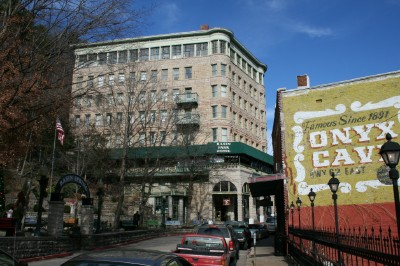
Eureka Springs - The per capita Wedding Capital of America

Eureka Springs, Arkansas
It often comes as a surprise visitors that the quaint Victorian town of Eureka Springs, Arkansas, hosts more weddings per capita than any city in the United States.

In fact, some years more people get married in Eureka Springs than actually live there! So I thought in honor of Valentine's Day it would be enjoyable to take a look at this charming community in the Ozark Mountains of Arkansas.

Eureka Springs has always been a special place. The first visitors came back in the late 19th century when dozens of mineral springs were found flowing from the sides of the mountains there. The town was founded in 1877 and in less than one year more than 3,000 people came to live in Eureka.

Historic Downtown of Eureka Springs
They came because of the popularity of mineral springs in those days. People believed the pure water provided cures for a variety of illnesses and the arrival of the railroad brought crowds in to enjoy the spas, hotels and other amenities of the resort community in the Ozarks.

The belief in the power of water from mineral springs diminished in the 20th century, but unlike many such places, Eureka Springs preserved its beautiful atmosphere and architecture. It stands today as one of the most beautifully preserved Victorian towns in the world. The romance of days gone by is unmistakable and the town offers beautiful historic accommodations, restaurants, shops and entertainment. Carriages roll through the streets and couples walk hand in hand along the sidewalks.

Crescent Hotel in Eureka Springs
And there are weddings. More weddings than can be imagined. There is no blood test and no waiting to get married in Eureka Springs. A couple can arrive, get their license, get married and be on their honeymoon in a beautiful historic hotel, bed and breakfast or more modern accommodation in less than 90 minutes.

An array of wedding locations are available, ranging from the simple to the elegant, or one of the town's many ministers will come to you and perform a wedding at the location of your choice. An overlook on East Mountain, for example, provides a spectacular view of the valley and Victorian town and is popular for couples looking to marry surrounded by the beauty of the mountains.

To learn more about Eureka Springs, please visit www.exploresouthernhistory.com/eurekaindex.

For complete information on getting married in Eureka Springs, please visit www.exploresouthernhistory.com/eurekaweddings.

Sunday, February 5, 2012

Historic Springs of Eureka Springs, Arkansas

Eureka Springs, Arkansas
The landscape of the South is dotted with towns and cities named after springs. There are Hot Springs, Warm Springs, Boiling Springs, Old Town Spring, Spring Hill, Winter Springs, Mineral Springs, Sylvan Springs, Holly Springs and the list goes on and on.
One of the most beloved such communities, however, is Eureka Springs. Located high in the mountains of the Ozarks, Eureka Springs is the number one wedding location per capita in the nation. More people go there to get married each year than actually live in the town.

Crescent Spring in Eureka Springs
Known for its beautiful scenery, inns, hotels, bed & breakfast inns, resorts, restaurants and unique shopping, Eureka Springs has done a marvelous job of preserving and restoring the historic springs that give the town its name.

A surprisingly large number of natural, mineral springs flow from the mountainsides surrounding the town. These springs were considered a source of health-giving mineral waters during the 19th century. Those were the days when crowds of people flooded to Eureka Springs to soak in its spring waters in hopes of finding miracle cures for physical and neurological illnesses.

Grotto Spring in Eureka Springs
The belief in the curative power of mineral springs faded in the 20th century, but Eureka Springs preserved its historic springs and today they add greatly to the charm of the beautiful Victorian community.

Probably the best known and photographed of the springs in Basin Spring, which is the centerpiece of a charming little park in the downtown area. Crescent Spring, down the mountain from the magnificent Crescent Hotel, is covered by a restored Victorian gazebo. A stone stairway leads up the mountain to the historic hotel itself.

Nearby is Grotto Spring, which flows from a natural grotto in the mountainside. History lovers also flock to Carrie Nation Spring, a natural spring that flows from the mountain across the road from the home of Carrie Nation, the famed ax-toting liquor fighter of the Prohibition era.

To learn more about Eureka Springs, its historic springs and other points of interest, please visit www.exploresouthernhistory.com/eurekaindex.

Thursday, February 2, 2012

Beauvoir in Biloxi, Mississippi - Final Home of President Jefferson Davis

Beauvoir, Final Home of Jefferson Davis
One of the most beautiful landmarks of the Mississippi Gulf Coast is the appropriately named Beauvoir, the last home of Confederate President Jefferson Davis.

The home survived the brutal winds and storm surge of Hurricane Katrina and his been restored to its pre-storm beauty. It faces across US 90 to Mississippi Sound and the Gulf of Mexico in the popular resort city of Biloxi.

Beauvoir in Biloxi, Mississippi
Built in 1848, the same year as the nearby Biloxi Lighthouse, Beauvoir originally was known as Orange Grove. Satsuma Oranges then grew in profusion on the grounds, as they once did across the entire northern Gulf Coast, giving the summer home of the James Brown family its name. Brown died in 1857 and his widow later sold the home to a real estate speculator who, in turn, sold it to Mrs. Sarah Dorsey.

Bedroom of Jefferson Davis
Mrs. Dorsey renamed the home Beauvoir (French for "Beautiful View") and in 1877 invited former Confederate President Jefferson Davis to use a pavilion on the grounds as a writing retreat. Two years later she agreed to sell the entire estate to Davis for $5,000, to be paid in three payments. Mrs. Dorsey died after receiving the first payment from Davis and the Southern leader was surprised to find that she had left Beauvoir to him in her will.

It was at Beauvoir that Davis completed his monumental work, The Rise and Fall of the Conferate Government and a shorter volume, A Short History of the Confederate States of America.

Now owned by the Mississippi Division of the Sons of Confederate Veterans, Beauvoir is open to the public daily and is a great place to explore the final years in the life of one of the most prominent Southerners of all time. The home features original furniture and other items that once belonged to the Davis family and the guides provide one of the best tours of a historic home that I've ever experienced.

To learn more about Beauvoir, please visit www.exploresouthernhistory.com/beauvoir.

Sunday, January 29, 2012

Biloxi Lighthouse - A Symbol of Mississippi Courage and Strength

Biloxi Lighthouse
The shining white tower of the Biloxi Lighthouse has survived two of the three worst hurricanes ever to hit the United States. Yet it still shines as a symbol of the courage and strength of the people of the Mississippi Gulf Coast.
Built in 1848, the tower is constructed of brick but its exterior is formed of panels of cast iron. It is, in fact, one of the few iron lighthouses in the South. It stands 45 feet tall from its foundations to the lantern room and is the only lighthouse in the United States that stands on the median of a major four-land highway (US 90).

The Biloxi Lighthouse has a remarkable history. For more than 160 years it has helped vessels navigate the shallow waters of Mississippi Sound, with only a brief interruption after it was darkened by Confederates during the Civil War. Legend holds that it was painted black as a sign of mourning when President Abraham Lincoln was assassinated, but in fact the temporary coating of black tar was done to protect the iron of the tower from rust and corrosion and not as a tribute to Lincoln.

Biloxi Lighthouse
The lighthouse in reality is a symbol of courage, strength, life and rebirth. Not only did it survive Hurricane Camille in 1969, it survived Hurricane Katrina in 2005. The latter storm hit Biloxi on August 28, 2005, with a wall of water that was more than 20 feet high. Inside the tower of the Biloxi Lighthouse, in fact, blue lines now show the depth of the water that surged across the beaches during both Camille and Katrina.

In the wake of Katrina, which destroyed 90% of the homes in Biloxi, a United States flag was draped from the lantern room of the lighthouse. It was one of those rare moments in American history when a single act inspires the people of an entire state. The lighthouse flag did just that, becoming a symbol of courage and determination for the people of Mississippi.

Biloxi and the Mississippi Gulf Coast launched one of the most determined rebuilding efforts in U.S. history. The Biloxi Lighthouse became a fixture on the state's license plates and the beautifully restored tower once again welcomes guests to one of the finest beach resorts in the South.

To learn more about the remarkable history of the Biloxi Lighthouse, please visit www.exploresouthernhistory.com/biloxilighthouse.


Saturday, January 21, 2012

Juniper Springs Recreation Area - Ocala National Forest, Florida

Juniper Springs Recreation Area
Ocala National Forest, Florida
One of the most beautiful historic sites in the nation, Juniper Springs is the centerpiece of a recreation area in Florida's Ocala National Forest.
Just 28 miles from I-75 at Ocala, Juniper Springs was one of the first recreation areas completed east of the Mississippi River by the Civilian Conservation Corps (CCC) during the Great Depression. Its original CCC features are beautifully preserved, as is the semi-tropical landscape that is unlike any other national forest recreation area in America.

Juniper Springs Recreation Area
Perhaps the most unique feature of Juniper Springs, aside from the spring itself, is the unique CCC-built millhouse. Completed in 1935-1936, this structure was the result of innovative thinking that overcame the problem of getting electricity to the park. When Juniper Springs was developed, the nearest source of electric power was then miles away. Without the money to pay for running electric lines to the recreation area, the CCC generated its own.

The charming millhouse was built at the point where the water from the spring basin flowed into Juniper Springs Run. Its undershot waterwheel powered a small generator that provided electricity for the park. The beautifully preserved millhouse is a favorite with photographers and now houses an exhibit about the development of the recreation area and the history of the CCC.

In addition to the millhouse, the park features swimming, camping, nature trails, picnicking and an access point to Juniper Springs Run, one of the most beautiful and unique canoe and kayak trails in the nation.

To learn more about scenic and historic Juniper Springs, please visit www.exploresouthernhistory.com/junipersprings.

Thursday, January 19, 2012

The Battle of Fredericksburg - Fredericksburg, Virginia

Stone wall at Sunken Road at Fredericksburg
Fredericksburg was, for the Union, one of those names that pierced the heart like the names Gettysburg and Vicksburg did for the the Confederacy. It was on the fields surrounding Fredericksburg that the Army of the Potomac suffered one of its worst defeats of the Civil War.

Key areas of the battlefield at now preserved at the Fredericksburg & Spotsylvania County Battlefields Memorial National Military Park, which also preserves areas of the Chancellorsville, Wilderness, Spotsylvania and other battlefields.
Bullet scarred house on the Fredericksburg battlefield
The Battle of Fredericksburg developed when U.S. President Abraham Lincoln named Gen. Ambrose E. Burnside to replace Gen. George B. McClellan as commander of the Army of the Potomac. While the latter general had favored a slow, methodical approach to dealing with Gen. Robert E. Lee and the Confederate Army of Nothern Virginia, Burnside proposed a rapid campaign with overwhelming force.

Inexplicably, however, Burnside pushed his army forward to the Rappahannock at Fredericksburg without making sure that his pontoon boats would be there ready for use in building bridges to cross the river. The week-long delay experienced in waiting for the pontoons to come up gave General Lee the time he needed to concentrate his on the heights overlooking Fredericksburg. By the time Burnside was ready to begin his crossing, Lee was so ready for him that, as one Confederate officer observed, a chicken couldn't have survived on the ground across which the Union soldiers would have to march.
Thousands of Union soldiers are buried at Marye's Heights
Even then, Burnside couldn't get across until after he blasted Fredericksburg with 8,000 artillery shells trying to drive away General William Barksdale's Mississippians who kept shooting his men everytime they tried to build their bridges.

Once he finally did get his army across the Rappahannock, Burnside then took another day to get his men formed for battle, while Lee and his generals watched from the heights above.

The main day of the Battle of Fredericksburg was December 13, 1862. Time after time the Union forces advanced and time after time they were driven back. At Marye's Heights, they never even got close to the Confederate infantry position at the stone wall and sunken road. By the time the day ended, the Army of the Potomac had lost over 12,000 men in killed, wounded and missing. It was one of the deadliest days of the war for the Union army.

To learn more about the Battle of Fredericksburg, please visit www.exploresouthernhistory.com/fredericksburg.

Monday, January 16, 2012

Death of "The Senator" - Florida's Largest Tree dies in Mysterious Fire

Men show the width of "The Senator" in this historic image.
Florida Memory Collection
In a stunning tragedy, a 3,500 year old cypress tree known as "The Senator" has been reduced to ash in a mysterious fire. Florida's largest tree all but vanished from the landscape in a single day.

The Orlando Sentinel reports that firefighters responded to the park in Longwood where "The Senator" was located at about 5:50 Eastern time this morning. The giant tree was found to be burning intensely and there was nothing that emergency workers could do to save it. By midday, it was gone. Only ashes and the charred stump remain to show that it ever existed at all.

The Florida Forest Service reports that the fire is not thought to have been caused by arson, but otherwise the origin of the blaze is a mystery. Additional investigation is underway.

You can read the Sentinel's full report by clicking here: http://www.orlandosentinel.com/news/local/seminole/os-senator-cypress-tree-fire-20120116,0,6171920.story.

"The Senator" as it once appeared.
Florida Memory Collection
The destruction of "The Senator" did not damage the nearby "Lady Liberty" tree, which is thought to be around 2,000 years old.

Giant cypress trees once dominated the landscape of Florida, where they had grown for thousands of years prior to the arrival of European explorers in the state. Most were felled during the timber days of the late 19th and early 20th centuries, but a few still remain.

The lifetime of "The Senator," if marked by human events, included the life of Jesus Christ, the fall of the Roman Empire, the signing of the Magna Carta, the arrival of Viking explorers in North America, the rise and decline of the Woodland and Mississippian cultures among Native Americans in Florida, the European discovery of Florida by Juan Ponce de Leon, the expedition of Hernando de Soto, the founding of St. Augustine (the first permanent city in the United States) in 1565, the founding of Jamestown in 1607, the arrival of the Pilgrims in 1620, the French and Indian War, the American Revolution, the founding of the United States, the War of 1812, the First, Second and Third Seminole Wars, the Civil War, the Spanish American War, World Wars I and II, Korea, Vietnam and millions of other significant events. Through them all, the great old cypress marked the time.  Now it is gone.

Wednesday, January 11, 2012

New book explores Murder & Mayhem in 1930s Florida

My newest book, "The Claude Neal Lynching," is now available in print or as an instant download for users of Amazon Kindle devices or Amazon's free software for your computer, iPad, etc. 

"The Claude Neal Lynching" tells the story of an outbreak of murder and mayhem in 1930s Florida that shook not just a state, but the entire nation. The chaos began on November 18, 1934, when a 19 year old woman was brutally murdered at a hog pen near the small town of Greenwood, Florida. The physical evidence pointed to a neighbor, farm worker Claude Neal, who later confessed repeatedly to the crime.

The crime was so brutal that men of the area decided Neal should not live and set out to lynch him.  Jackson County at the time, contrary to the claims of many writers, was not a hotbed of lynching. In fact, there had not been a lynching in the county for nearly 30 years. Sheriff W.F. Chambliss and his deputies tried to protect Neal, moving him to jails in Chipley, Panama City and eventually Pensacola. From there he was slipped away to the jail in Brewton, Alabama.  It was in Brewton that the lynch mob finally found him, forcing its way into the jail with pistols, shotguns and dynamite.

Neal was lynched in the swamps of Jackson County on the night of October 26, 1934, by a small group of six men. Thousands more, representing more than ten states, wanted to take part and had even gathered to do so, but were presented not with a living suspect but a dead body.  They went on a rampage, carrying Neal's body to the county seat of Marianna and hanging it from a tree on the courthouse square.

The building chaos turned into a full-fledged riot as local authorities tried to defend citizens and carry out their duty.  Even a Florida Supreme Court justice became involved, boldly stepping out through the courthouse doors even as the rioting mob was preparing to knock them down with a battering ram. With no weapon other than his powerful voice, he drove back the mob and saved the lives of the men inside the building.

National Guard troops were sent in, as newsreel cameras rolled, and positioned machine guns on all four corners of the courthouse square. The sheriff had to be protected by armed soldiers and troops also stood guard at funerals and court proceedings.  It was one of the most chaotic events in the history of any small town in America.

The events of October 1934 have been misunderstood for years and, while the lynching and riot have been discussed in more than 3,000 books, not a single one has even correctly spelled Lola Cannady's name.

"The Claude Neal Lynching" is a chronological history of an outbreak, written by a resident of the county where it happened.  It includes never before discussed evidence, interviews with participants in the lynching about how and why they did what they did, and more.  I hope you will consider it.

To order the book through Amazon, please follow this link: 
The Claude Neal Lynching: The 1934 Murders of Claude Neal and Lola Cannady

Amazon Kindle is available by clicking here:  The Claude Neal Lynching

Chancellorsville - Scene of Stonewall Jackson's Final Battle


Chancellorsville Battlefield
Just seven miles off I-95 between Richmond, Virginia, and Washington, D.C., the National Park Service preserves a spot in an old road where famed Confederate general Thomas J. "Stonewall" Jackson was severely wounded in a friendly fire incident.

The Battle of Chancellorsville may well have been the most brilliant success of Jackson's military career. With a force of 30,000 men, he hit the right flank of the massive 120,000 man Army of the Potomac, delivering a shock that would lead the following day to one of the most embarrassing Union defeats of the entire Civil War.

Jackson's flank attack was a key element of General Robert E. Lee's stunning victory over the huge army of Union general Joseph "Fighting Joe" Hooker. Together the two generals used intelligence from Southern cavalry commander General "Jeb" Stuart to develope a plan that was wildly successful. Stuart had discovered that the right flank of the Army of the Potomac was "in the air" and vulnerable to attack. Lee and Jackson agreed that the latter officer should try to sweep around that flank and roll up the Union army.


Jackson
Jackson's maneuver succeeded and he hit the very end of the Union lines late on the afternoon of May 2, 1863. The attack shocked the entire Federal army. Late in the day, with darkness and the smoke of battle obscuring visibility, Stonewall Jackson rode forward with his staff to examine the placement of the Union troops trying to resist his attacks. As he returned to his own lines, he was mistaken for the enemy and his own troops opened fire. The noted Confederate general toppled from the saddle, severely wounded. He died eight days later.


Jackson Monument
"Jeb" Stuart took command of Jackson's wing of the army and joined Lee in a smashing attack the next day that sent Hooker retreating across the Rappahannock River.

Key areas of the Chancellorsville Battlefield, including the site where Stonewall Jackson was wounded, are now part of of the Fredericksburg and Spotsylvania County Battlefields Memorial National Military Park.

To learn more, please visit www.exploresouthernhistory.com/chancellorsville.