Friday, November 26, 2010

Apalachicola Bay Oysters - Rich History of the World's Best Oyster

Pic by Betty Gilbert Davis
Many top chefs and culinary experts have proclaimed it as the world's best oyster and any oyster lover who has ever tasted the famed Apalachicola Bay oyster is likely to agree.

Harvested from a 30 mile stretch of Florida's Apalachicola Bay for thousands of years, the oysters are prized for their clean taste, consistency and size. They are also the center of a significant and deeply historic industry that has been a way of life in Apalachicola since before the Civil War.

Apalachicola Bay Oyster Boats
Ancient Indians discovered the prize oysters thousands of years ago and they have been hand harvested ever since. Even today, the wild oysters are harvested by men and women in small boats, using long rake-like tongs to bring them up from the oyster beds of the bay. The sight of the Apalachicola oyster fleet out working the bay on a clear day is one of the most interesting in the South.

Surprisingly, just as the oyster has meant a way of life for Apalachicola bay, it has also played a critical role in preserving Apalachicola as one of the most charming and best-preserved historic cities on the Florida Gulf Coast. To learn how and to read more about the delicacy of Apalachicola Bay oysters, please visit www.exploresouthernhistory.com/apalachicolaoysters.

Thursday, November 11, 2010

Ocala Historic District - Ocala, Florida

The Ocala Historic District in Florida covers 173 acres and includes more than 200 noteworthy structures, making it one of the most fascinating historic districts in the South.

The district was added to the National Register of Historic Places in 1984 and has been the center of beautiful preservation and restoration efforts. With its oak-shaded streets, large lots and stunning architecture, it is a wonderful place to spend some time walking the sidewalks and exploring.

The development of this residential area in Ocala began after Silver Springs achieved worldwide note as a tourist destination. The booming economy of the Central Florida city prompted Joseph Caldwell to develop his land on what was then the outskirts of town. The development was platted in 1880 and soon became "the" place to live in Ocala.

With the Victorian styles of architecture then in vogue, the district saw the construction of huge homes in the Queen Anne Revival and other styles. Over the years other types or styles were added in the Frame Vernacular, other Revival and bungalow styles. The district was home to the son of a Confederate general, leading Central Florida businessmen and even the man who is thought to have been the first to introduce Lt. Col. Theodore "Teddy" Roosevelt as the "future President of the United States."

To learn more, please visit www.exploresouthernhistory.com/ocala2.

Saturday, November 6, 2010

Silver Springs & the Silver River - Ocala, Florida

One of the most beautiful places in the South, Silver Springs is a massive natural spring on the outskirts of Ocala, Florida.

Along with 24 other springs, the main or Mammoth Spring at Silver Springs feed the crystal clear Silver River, which is beautifully preserved in its natural condition thanks to the opening in 1987 of Silver River State Park. Silver Springs is also now owned by the State of Florida, but is operated as a theme park by an entertainment company which leases it from the state.

The main spring has been featured in 20 movies over the years, including such famous ones as Rebel Without a Cause and the popular James Bond film Moonraker. Pouring out an estimated 550 million gallons of water a day, Silver Springs has long been one of Florida's most famous tourist attractions. Untold hundreds of thousands have peered into its depths from glass-bottomed boats since they became a fixture there in the 1870s.

The water from the spring is joined by water from 24 other springs to form the Silver River, a major tributary of Florida's Ocklawaha and St. Johns Rivers. Virtually the entire length of the stream is now preserved in Silver River State Park, which provides the general public with affordable access to the beautiful river and the unique ecosystems that surround it.

This area was a key point of ignition for the Second Seminole War, in which the warriors of Florida's Seminole Nation waged desperate resistance against the U.S. Army in an effort to avoid removal west to what is now Oklahoma on the Trail of Tears. The war started in 1835 at Fort King (now Ocala) when the famed Seminole warrior Osceola led an attack on U.S. Indian Agent Wiley Thompson. It would last for seven years and and considering the budget of the Federal government at the time, was one of the costliest wars ever waged by the United States.

To learn more about Silver Springs and the Silver River, as well as other places of interest in the vicinity, please visit www.exploresouthernhistory.com/silversprings.

Wednesday, November 3, 2010

Expanded Edition of "The Battle of Natural Bridge, Florida" is now available

The new expanded edition of my book, The Battle of Natural Bridge, Florida: The Confederate Defense of Tallahassee, is now available.

This edition includes two new chapters, revisions of some thoughts on the tactics of the battle and expanded casualty lists. It represents a major expansion from the first edition and offers, I think, a much better explanation of the battle.

The Battle of Natural Bridge was fought along the St. Marks River south of Tallahassee on March 6, 1865, and was the last significant Confederate victory of the Civil War. As proof of this, it preserved Tallahassee's status as the only Southern capital city east of the Mississippi River not conquered by Union troops. It also preserved a large area of North Florida and South Georgia from economic destruction at the hands of Union soldiers.

The new edition is 241 pages long (plus introductory material) and covers the Natural Bridge expedition in detail. It also includes photographs, maps and a listing of every soldier, Union and Confederate, who is known to have taken part in the fighting.  The casualty lists have been greatly expanded.

To order via Amazon, please click the ad at the top of this posting.

Tuesday, November 2, 2010

Battle of Yorktown - Yorktown, Virginia

On October 17, 1781, one of the most dramatic moments in the history of the world was enacted at the town of Yorktown, Virginia.

A little drummer boy, braving the shot and shell being thrown by American and French cannon, climbed to the top of an earthen breastwork and began to beat out a call to parley. One by one the big guns fell silent and a British officer soon joined the drummer atop the fortifications, a white flag in his hand.

Two days later, the British army of Gen. Lord Charles Cornwallis marched out of Yorktown and surrendered its arms to the allied army of Gen. George Washington. A British band played a then popular tune called "The World Turned Upside Down."  The Battle of Yorktown, the climactic battle of the American Revolution, was over. The United States of America would survive to become a beacon of freedom to people from all over the world.

The site of Washington's monumental victory is now preserved at the Yorktown Battlefield section of Colonial National Historical Park. Visitors can walk the battle lines to see the preserved forts and batteries of both armies. The site of the British surrender is preserved, as are many other key points of the battle that literally turned the world upside down.

To learn more about Yorktown Battlefield and this fascinating moment in Southern history, please visit www.exploresouthernhistory.com/yorktown.

Saturday, October 30, 2010

Ghost Stories & Tales of the Unexplained that you might like...

Halloween is upon us again and whether you are "for" the holiday or "against" it, I thought you might enjoy reading some unique legends from Southern history.

Ghost stories and tales of unexplained creatures and events are part of our culture. Long before radio, tv and internet came along, our ancestors used to sit around fireplaces and campfires at night and tell stories. Some of these tales have been handed down for hundreds of years and others are a bit more recent.

Because we focus on Southern history and culture, we make a diligent effort to preserve the legends of our past (and present, in some cases). Here are a few of my favorites that I thought you might enjoy:
 You can read many others by visiting our special section on Ghosts, Monsters & Unexplained Mysteries at www.exploresouthernhistory.com/ghosts.

Monday, October 25, 2010

Battle of Sunshine Church - Round Oak, Georgia

By the time his 2,000+ man force approached the little country chapel called Sunshine Church on July 31, 1864, Union General George H. Stoneman knew he was in trouble. The disaster stalking him hit hard there in an event remembered today as the Battle of Sunshine Church.

Stoneman had ridden south from Decatur four days earlier, planning to break the railroad between Atlanta and Macon before charging into the latter city and releasing the Union prisoners held there at Camp Oglethorpe. This achieved, he planned to ride on to Andersonville and free the tens of thousands of Federal p.o.w.'s at Camp Sumter, before returning to the Union lines at either Atlanta or Pensacola a hero.

Things, however, did not go as planned. Stoneman was defeated by swarming Confederate troops on the outskirts of Macon at the Battle of Dunlap Hill. Beginning a rapid retreat back up the railroad for the safety of Sherman's lines around Atlanta, he received multiple reports that Confederate cavalry was on his heels.

When he reached Sunshine Church, which was then located just south of today's community of Round Oak, Stoneman learned that Confederate troops were also blocking his way. He had no way of knowing it, but he was opposed by Confederate General Arthur Iverson, who had grown up in the vicinity and knew the backroads and trails north of Macon far better than the Federal soldiers. He got in front of Stoneman and entrenched his men along a ridge just north of the 1864 site of Sunshine Church (the church was relocated a couple of miles north to Round Oak after the war).

While Iverson blocked the way, other Confederates from Macon swarmed up behind Stoneman, effectively trapping the raiders.

The Battle of Sunshine Church lasted into the night of the 31st until the morning of August 1, 1864. It ended on a rise known still today as Stoneman's Hill, where General Stoneman and hundreds of his men raised the white flag in one of the few signal defeats of Union troops during Sherman's Atlanta Campaign.

To learn more about this fascinating battle, please visit www.exploresouthernhistory.com/sunshinechurch.

Friday, October 22, 2010

Ghosts of the Russ House - Marianna, Florida

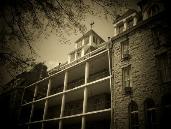
Built in 1895, the historic Russ House in Marianna is one of the most beautiful old houses in Florida. Some say it is also one of the most haunted.

Now the home of the Jackson County Chamber of Commerce, the restored house faces West Lafayette Street (U.S. 90) in Marianna, a Northwest Florida city founded in 1827 and rich in history. For 100 years, however, the Russ House was a family residence and seems to have been the focal point for an unusual series of tragedies. These included disputes over a marriage, the loss of a family fortune and the suicide of its builder.

Perhaps because of these events, the house has developed a reputation for ghosts. Photographs taken of the structure's exterior sometimes show what appears to be the indistinct of a man looking out from the windows, even when no one is inside. Visitors report encountering strange scents that remind them of old-fashioned powder or perfume. Employees say the elevator opens and closes on its on and without explanation.

Ghost hunters have investigated the house and have come away convinced that it is haunted by at least two ghosts, one of a man and one of a woman. Those who believe in such things are convinced and many report having seen the figure of a man with a mustache looking down from the top of the stairs. Skeptics, of course, say that the stories originate from the fact that for many years it was a big, weathered, spooky old house.

To learn more about the history of the Russ House and some of the ghost stories told about it, please visit www.exploresouthernhistory.com/russhouseghosts.

Thursday, October 21, 2010

Battle of Dunlap Hill (Dunlap's Farm) - Macon, Georgia

On July 30, 1864, things began to go very wrong for Union General George Stoneman's raid into Middle Georgia when he came up against Confederate forces at the Battle of Dunlap Hill.

Also called the Battle of Dunlap's Farm, the engagement was fought to defend Macon from Stoneman's 2000+ Federal raiders.

Stoneman's Raid had begun on July 27th when he left Decatur, Georgia, for a move down the railroad from Atlanta to Macon and beyond. The Atlanta Campaign was then underway and the city had not yet fallen, but by cutting the railroad, Stoneman hoped to hasten its surrender. He also had convinced a somewhat skeptical General William Tecumseh Sherman to allow him to attempt a daring raid to free the tens of thousands of Union prisoners of war being held at Camp Oglethorpe at Macon and Camp Sumter at Andersonville.

Sherman cautioned Stoneman, however, not to attempt the extended raid if it seemed Confederate forces ahead of him were too strong. Stoneman, however, rode his mounted force directly into the jaws of waiting Confederate forces.

As he moved south toward Macon, he did put men at work breaking the railroad - although the damage would be quickly repaired by Southern workers - but also spread his men out to inflict as much destruction as possible. Homes were invaded and looted, innocent civilians terrorized, livestock stolen or killed, barns destroyed and as much other damage possible inflicted.  By the time the Federals reached the northern outskirts of Macon, however, the Confederates were waiting.

Despite a strong attack against Southern positions at Dunlap Hill and around the Dunlap House (now in Ocmulgee National Monument), the Union troops were unable to break through Confederate lines to secure the railroad bridge they had targeted. To make matters worse, they were unable to bring their own artillery to bear on Southern cannon firing on them from nearby Fort Hawkins. Instead, they opened on civilian targets in the city itself with their two 3-inch rifled cannon.

Stoneman finally withdrew, but he had ridden into a situation from which he would not escape. He surrendered two days later after the Battle of Sunshine Church.  To learn more about the Battle of Dunlap Hill, please visit www.exploresouthernhistory.com/dunlaphill.

Monday, October 18, 2010

The Edgefield Ghost - A Poltergeist in Antebellum South Carolina

Ghost stories abound in the South, but few are as well documented as an incident that took place in the Edgefield District of South Carolina in 1829. It was known at the time as the Edgefield Ghost.

The strange encounter took place in the home of Isaac Burnett and began as strange sounds heard in and around the house, but gradually escalated to what newspapers of the time described as a full blown paranormal encounter. The ghost was not seen, but would routinely talk, answer questions and even whistle songs. Word of the haunting quickly spread through the Edgefield District and scores of other individuals came to see it for themselves. The ghost, or whatever it was, obliged, talking to everyone from neighbors to an old time fire and brimstone Baptist preacher.

The Edgefield Ghost was widely documented in letters and newspapers of the time and continued to be mentioned by editors for decades to come.

The site of the haunting, which gradually faded away in the 1830s, is now in Greenwood County, South Carolina, roughly between the cities of Edgefield and Greenwood. The Burnett house is long gone, as are all traces of the old farm, with only woods and overgrown fields marking the site.

To learn the full story of this remarkable event, please visit www.exploresouthernhistory.com/edgefieldghost.

Saturday, October 16, 2010

Leaf Change turnining the Alabama Mountains Gold and Red

The staff at Cheaha Lodge at Cheaha State Park in Alabama reports that the drive up the mountain from Talladega is beginning to take on excellent color as the reds and golds start to move down the slopes of the state's highest point.

The park encompasses thousands of acres at Mt. Cheaha, the highest point in Alabama and a mountain rich in history and scenic beauty. Cheaha State Park, which features a very nice restaurant with possibly the best view of any dining establishment in the state, was established as a public works project during the Great Depression and preserves many original structures and trails first established by workers of the Civilian Conservation Corps (CCC).

The fall is a particularly beautiful time to visit the mountain, which offers beautiful scenic drives and overlooks where the stunning reds and golds of the leaves can be enjoyed. There is a fully accessible walkway leading to Bald Rock on one end of the mountain, where visitors of all abilities can take in the scenic view. The area also features waterfalls, hiking trails, cabins, a hotel, rock formations and adjoins the beautiful Talladega National Forest.

To learn more, please visit www.exploresouthernhistory.com/cheaha1.

Monday, October 4, 2010

Talimena Scenic Drive - Arkansas & Oklahoma

With the first cool weather of fall now in the air, it is a great time to explore some of the beautiful and historic scenic roads and byways of the South. A personal favorite is the Talimena Scenic Drive, which stretches across the tops of the Ouachita Mountains from Mena, Arkansas to Talihina, Oklahoma.

The beautiful roadway, which was built through the Ouachita National Forest in 1965-1969, follows earlier dirt roads opened by pioneers of the region during the 19th century and the Civilian Conservation Corps (CCC) in the Great Depression. It is now recognized as one of the most beautiful scenic byways in the South and offers drivers paved access to the stunning scenery of such locations at Rich Mountain, Queen Wilhelmina State Park, Winding Stair National Recreation Area and more.

Along the way, you can learn about a wide array of historic sites. The Rich Mountain Fire Tower, for example, was the location from which one of the largest forest fires in Southern history was first spotted. Queen Wilhelmina State Park, sometimes called the Arkansas Castle in the Sky, was first established as a stunning stone lodge by railroad companies during the late 19th century. The park today features numerous historic sites, beautiful overlooks and other points of interest including a hotel, cabins, restaurant, miniature train, hiking trails and more.

Just up the drive from the state park is the historic Rich Mountain Cemetery, established before the Civil War by early settlers of the Ouachitas. It is noted for its tale of the Ghost of Rich Mountain, the sad story of a young girl who froze to death nearby after being cornered by wolves during the tragic days of the Civil War.

Along the Oklahoma section of the drive, you will find such sites as Horse Thief Springs, once used by Old West outlaws, and Old Military Road Historic Site, which preserves a section of the historic road that connected Fort Smith with Fort Towson.

To learn more about the Talimena Scenic Drive, please visit www.exploresouthernhistory.com/ARTalimena1.

Tuesday, September 28, 2010

Edgar Cayce - The Sleeping Prophet in Selma, Alabama

Edgar Cayce (1877-1945) was one of the most unique individuals of the early 20th century.

Born in Kentucky, he was a psychic that many called the "Sleeping Prophet" because he did his readings while in a state of self-hypnosis. Beginning in around 1901-1902, Cayce developed a widespread reputation because of what believers said was his ability to diagnosis medical conditions and recommend cures that often worked. He did this without examining or, in many cases, even meeting the patients.

In 1912, Cayce moved from Hopkinsville, Kentucky, to Selma, Alabama. In Selma he operated a photography studio for twelve years, was active in community affairs and was often mentioned in newspapers across the country. By 1920, one of the Birmingham newspapers was able to report that he had done readings for thousands of people, mystifying doctors and scientists in the process.

Edgar Cayce lived in Selma until 1923. The storefront where he kept his photography studio and also lived still stands today. To learn more, please visit www.exploresouthernhistory.com/selmacayce.

Friday, September 17, 2010

The Battle of Griswoldville, Georgia - Opposing Sherman's March to the Sea

The only major infantry fight of Sherman's March to the Sea was the Battle of Griswoldville, fought just outside of Macon, Georgia, on November 22, 1864.

A column of Georgia militia, state line and emergency battalion troops, augmented by a regular artillery battery, reached Griswoldville on their way from Macon to Augusta and found a farm just beyond the railroad community swarming with Union soldiers from Sherman's right column. The commanders who had sent them out thought that Sherman's army had already passed and that the route was clear. The men had marched under orders not to precipitate a major engagement if they encountered enemy forces.

Instead, Brigadier General Pleasant J. Philips moved his men into a line of battle and ordered them to advance on the Federals, who rushed to throw up temporary breastworks along a ridge. The position offered them an outstanding field of fire, which they used to great advantage.

As  the battle went on, the Confederates lost all semblance of command and control, but unlike so many other militia forces did not break and run when faced with an entrenched force of regular enemy soldiers. Instead, in one of the most courageous displays of the war, they charged up the ridge over and over. It was the bloodiest fighting of the March to the Sea and ended with a ravine down the ridge filled dead and dying Georgians.

To learn more about the battle and today's Griswoldville Battlefield State Historic Site, please visit www.exploresouthernhistory.com/griswoldvillebattlefield.

Friday, August 20, 2010

St. Augustine, Florida - New Section Now Online!

St. Augustine, Florida, is the oldest city in the continental United States. Founded by the Spanish in 1565, it has been occupied ever since.

In fact, St. Augustine residents had a public park before the first settlers waded ashore at either Jamestown, Virginia, or Plymouth Rock in Massachusetts. The city also boasts a long list of other "oldest" or "first" distinctions. It is home to the oldest house, the oldest religious site, the oldest masonry fort, the first settlement for free blacks and many others.

Because of its importance to Southern and U.S. history, I've added an expanded section on St. Augustine to the main website at http://www.exploresouthernhistory.com/. It features directories to a variety of historic sites and points of interest in the nation's oldest city and as it expands will include hotel and other information of use to visitors.To visit the new St. Augustine section, please go to www.exploresouthernhistory.com/staugustine1.

The section will be expanding with the addition of other new pages over the coming week, so check back and feel free to drop a comment and let me know what you think or if there is another site in St. Augustine you would like to see added!

Wednesday, July 28, 2010

Columbus, Georgia - Historic City on the Chattahoochee

Columbus, Georgia, has been visited by untold thousands of Americans over the years, many of them because they were stationed at the U.S. Army's famed Fort Benning.

Thousands of new visitors, however, are learning the Columbus is realizing its potential as a major heritage tourism destination. Noted for its multiple historic districts, Riverwalk, museums and more, the city has placed major emphasis on its historic resources and the results are stunning.

From its revitalized downtown area with the River Center for the Performing Arts and allegedly haunted Springer Opera House, the city spreads out along the Chattahoochee River from Lake Oliver on the north to Fort Benning on the South. Founded in 1828, Columbus was a major riverboat port and manufacturing center during the antebellum era.

The Confederate Navy built the ironclad C.S.S. Jackson here and the city was home to one of the South's few major industrial complexes during the Civil War. The Battle of Columbus, fought on Easter Sunday in 1865, was the last major land battle of the war.

Columbus rebounded from the destruction dealt it by Union troops following that battle and today is a progressive and modern city. Its past, however, remains very much alive. The main Columbus Historic District preserves a stunning area of historic and restored homes, including two that once housed the family of Dr. John Pemberton, the inventor of Coca-Cola. The Columbus Riverwalk links a variety of historic sites and points of interest, among them the National Civil War Naval Museum, which houses two original Confederate warships as well as reconstructions of the U.S.S. Hartford, U.S.S. Water Witch and C.S.S. Albemarle. Near the entrance to Fort Benning is the National Infantry Museum, which relocated last month into a stunning new facility.

To learn more about historic Columbus, Georgia, please visit www.exploresouthernhistory.com/gacolumbus1.

Thursday, July 22, 2010

Elizabeth Female Academy - A Reminder of Audubon in Mississippi

John James Audubon is remembered today as one of the finest naturalists ever to explore the North American continent. He is memorialized in the Audubon Society and his work, particularly on the bird species of the United States, is still critical today.

He spent many months roaming through the South, studying its wildlife up close, and produced the only known artistic representations of such rare species as the Ivory Billed Woodpecker from life. It is a little known fact, however, that the Haitian born Audubon survived during many of his explorations by painting portraits and teaching drawing. Among the places he worked was a landmark college for women along the Natchez Trace in Mississippi.

The Elizabeth Female Academy, founded in 1818, was the first college in the United States to award degrees to women (a distinction also claimed by Wesleyan in Georgia). The ladies who attended Elizabeth studied advanced topics including Latin, history, mathematic, natural science, philosophy and art. For six weeks in the summer of 1822, their drawing instructor was John James Audubon.

The famed naturalist walked 7 miles each way in the blazing Mississippi sun to teach at the academy, which was located up the trace from Natchez in Washington. The heat and exposure to mosquitoes and other insects soon left him bed-ridden with fever. When he recovered, he accepted a position in Natchez and did not return to the job at the academy.

The ruins of Elizabeth Female Academy can be seen today along the Natchez Trace Parkway. The unique institution held a landmark place in American education and it is well worth taking your time to visit the historic site during a trip up or down the Trace. To learn more, please visit www.exploresouthernhistory.com/natchezelizabeth.

Monday, July 19, 2010

Washington, Georgia - Historic Antebellum City

Founded as a frontier fort before the American Revolution, the charming small city of Washington, Georgia, is a jewel of antebellum architecture and history.

Home to over 100 antebellum homes and structures, Washington was the economic, social and political center of a large plantation district during the years leading up to the Civil War. It was the home of U.S. Senator Robert Toombs, who went on to become the first Secretary of State of the Confederacy and a Confederate general, as well as Porter Alexander, who gained fame as the commander of artillery in the Army of Northern Virginia under General Robert E. Lee.

As the war drew to a close in 1865, Washington became the focal point of great drama. Varina Howell Davis, the First Lady of the Confederacy, arrived there and spent several nights at Holly Court, a beautiful antebellum home that is now a bed & breakfast end. Richmond had fallen and the Davis family and other elite members of Confederate society were fleeing south to Florida in hopes of finding a way to escape the Federal soldiers on their trail.

President Jefferson Davis held his final conference with other key Southern leaders in Washington before beginning a final attempt at flight that ended with his capture at Irwinville, Georgia, a few days later.

The city also figures prominently in the mystery of the missing Confederate treasury. Vast quantities of gold and silver spirited away from Richmond at the end of the war were last seen in Washington and there are many legends of buried treasure in the area.

The city today is a remarkable place with a charming downtown and oak-shaded streets lined by historic homes and churches. To learn more, please visit www.exploresouthernhistory.com/washingtonga.

Friday, July 16, 2010

New EcoTourism Page now online at ExploreSouthernHistory.com

Life in the South is and always has been tightly connected with nature. From the prehistoric days of the Indian hunters to today, the people of the region have had a special relationship with nature and the environment.

There are few Southern families, regardless of race, culture or origin, that do not have stories tied in some way to the land. From the mountains of the Blue Ridge and Ozarks to the bayous of Louisiana and deep swamps of Georgia, Alabama, South Carolina and Florida, Southerners are a people closely associated with the land around them.

And today, with the economy experiencing such severe difficulties and unemployment and taxes at such highs, many Southern families are looking back to the land as a place of relaxation, comfort and escape. The great outdoors offer affordable escapes for families from all walks of life and, while economical to visit and explore, offer untold rewards in terms of memories and marvels.

Learning about nature and the environment and enjoying what the outdoors have to offer is what ecotourism is all about. It is one of the fastest growing tourism industries in the South and is taking larger numbers of visitors to Southern outdoor locations each year. Many of these points are rich in both cultural and natural history and offer educational opportunities as well as beautiful getaways.

To help you explore some of the more unique outdoor locations in the South, I've launched a new section at ExploreSouthernHistory.com that focuses on ecotourism and the natural wonders of our very special region of the country. You will find information on springs, rivers, scenic spots, caves, geological wonders, mountains, waterfalls and more. This section will expand rapidly as I continue to add new spots, so be sure to bookmark it and check back regularly.

 To learn more, please visit www.exploresouthernhistory.com/naturalwonders.

Thursday, July 15, 2010

Mount Locust Inn & Plantation - Natchez Trace Parkway, Mississippi

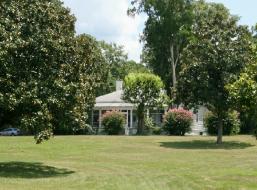
Mount Locust, located atop a hill at the 15.5 mile marker of the Natchez Trace Parkway, is one of the most important historic sites along the 444 mile long National Park area.

Built in 1780, while the American Revolution was still in full fury, the historic home originally served as an inn or "stand" along the famed Natchez Trace. This roadway led from Natchez, Mississippi, to Nashville, Tennessee, and provided a short cut for "Kaintuck" boatmen who floated cargoes of furs and farm products down the Mississippi River to Natchez and New Orleans. Steamboat travel had not yet been developed, so getting back home to upriver settlements in the Ohio, Cumberland and Tennessee valleys wasn't quite as easy as getting downstream. The solution was the Natchez Trace. Sometimes called America's first "superhighway," it was an overland path by which the boatmen could make their way back home.

In those days fifteen miles was about the distance that a person could be expected to walk in a day, so resting places naturally developed in intervals of about that length. Mount Locust was just over fifteen miles north of Natchez and offered food and sleeping space to weary travelers for 25 cents a day.

In later years, when travel on the Trace was replaced by steamboats on the Mississippi, the house became the center of a large Mississippi cotton plantation. When the Natchez Trace Parkway was developed, however, the park service acquired the house and grounds for development as a historic site.

The unique old home, which far pre-dates the state of Mississippi, has been restored to its 1820 appearance and is in a remarkable state of preservation. To learn more, please visit www.exploresouthernhistory.com/natchezlocust.